Legal problems can feel scary, especially when someone is harming your rights, property, or peace. In these situations, courts can step in quickly. One powerful legal tool is an injunction.
In this guide, we’ll break down the injunction definition law, explain its purpose, types, real examples, and how you can request one — all in simple, reader-friendly language.
Table of Contents
What Is the Simple Definition of Injunction?
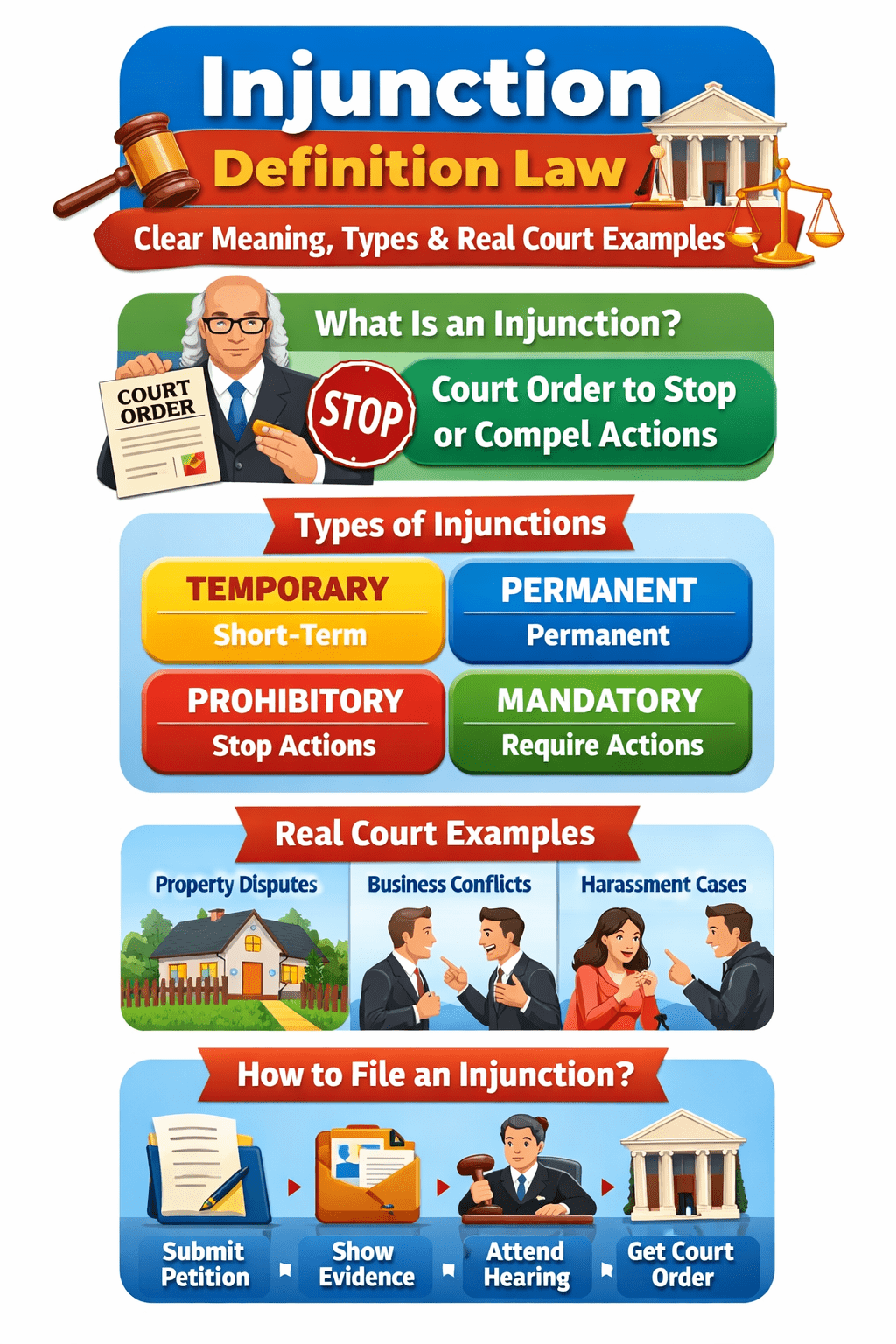
An injunction is a court order that tells a person or business to do something or stop doing something.
It is not about money damages. Instead, it focuses on stopping harm before it gets worse.
In simple words:
An injunction is a legal command issued by a judge to prevent unfair harm.
It is often used when money alone cannot fix the damage.
What Is the Purpose of an Injunction?
The main purpose is to protect someone from immediate and serious harm.
Courts use injunctions to:
- Prevent damage to property
- Stop harassment or threats
- Protect business interests
- Enforce contractual obligations
- Maintain peace until a full trial happens
An injunction is considered an equitable remedy, meaning it is based on fairness rather than financial compensation.
For example:
- If someone is illegally building on your land, the court can stop construction.
- If a company is stealing trade secrets, the judge can order them to stop.
What Is an Example of an Injunction?
Here are some real-life situations:
1. Business Dispute
A former employee breaks a non-compete agreement and joins a rival company. The employer asks the court to stop the employee from working with competitors.
2. Property Conflict
A neighbor starts building a wall that crosses your property line. You request a court order to stop construction immediately.
3. Harassment Case
If someone repeatedly threatens or stalks you, a judge may issue a restraining order (which is a type of injunction).
These are common injunction examples seen in courts.
How Many Types of Injunctions Are There?
Courts generally recognize several major injunction types in law:
1. Temporary Injunction
Issued for a short period until the court makes a final decision.
2. Preliminary Injunction
Given early in a lawsuit to prevent harm before trial.
3. Permanent Injunction
Issued after the court’s final ruling. It remains in effect permanently.
4. Mandatory Injunction
Orders someone to take a specific action.
5. Prohibitory Injunction
Orders someone to stop doing something.
Each type serves a different legal purpose depending on urgency and circumstances.
Injunction Meaning in Contract Law
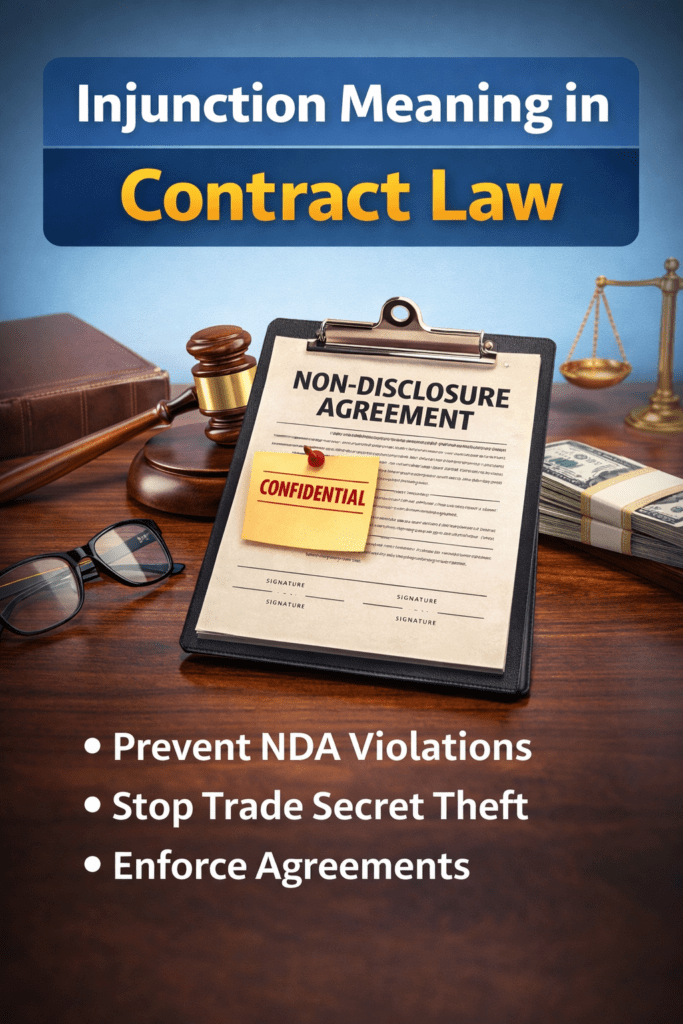
In contract disputes, courts may use injunctions to enforce agreements when money is not enough.
For example:
- Preventing a former partner from revealing confidential information
- Enforcing a non-disclosure agreement
- Stopping violation of intellectual property rights
In contract law, this remedy ensures parties respect legally binding promises.
Grounds for Injunction
Courts do not grant injunctions easily. You must prove certain legal grounds:
- Irreparable Harm – The damage cannot be fixed by money.
- Likelihood of Success – You have a strong legal case.
- Balance of Hardship – You will suffer more harm than the other side.
- Public Interest – The order will not harm the public.
Judges carefully examine these factors before granting relief.
Injunction Order on Property
Property disputes are one of the most common reasons people seek injunctions.
Examples include:
- Stopping illegal construction
- Preventing land trespassing
- Blocking unauthorized sale of shared property
- Freezing property transfers during legal disputes
A court can issue an injunction order on property to preserve ownership rights until the case is resolved.
How to File an Injunction
If you believe you need one, here is a general process:
Step 1: Submit a Petition to the Court
You formally request relief by filing legal paperwork.
Step 2: Provide Evidence
You must show proof of harm — documents, photos, contracts, or witness statements.
Step 3: Attend a Hearing
The judge listens to both sides.
Step 4: Court Decision
The judge may grant or deny the request.
In some emergency situations, courts issue ex parte orders, meaning they act without hearing the other party first.
Injunction Synonym
Some related legal terms include:
- Court order
- Judicial restraint
- Restraining order
- Equitable relief
While similar, each term has specific legal meaning depending on context.
Injunction Medical Meaning
Outside law, the word can sometimes appear in medical or ethical discussions. However, in legal context, it strictly refers to a court directive.
Medical professionals may discuss injunctions when courts order specific treatments or prevent certain procedures.
Important Legal Situations Where Injunctions Matter
Certain legal questions connect closely with injunctions:
- In criminal cases, people often ask: How Can the State Prosecute Without a Witness in Court?
- In law enforcement cases, people wonder: Does Asking If the Escort Is Law Enforcement Make a Difference?
In some of these cases, injunctions can be used to prevent unlawful actions before they escalate.
Why Injunctions Are Powerful
Unlike financial compensation, this legal remedy:
- Stops harm immediately
- Protects rights before trial
- Prevents permanent damage
- Preserves the status quo
Courts treat them seriously because they can strongly affect someone’s actions.
FAQs
Is an injunction the same as a restraining order?
Not exactly. A restraining order is a type of injunction, usually used in harassment or domestic cases. But injunctions also apply in business, property, and contract disputes.
How long does an injunction last?
It depends on the type. Temporary orders may last days or weeks. Permanent orders can last indefinitely unless modified by a court.
What happens if someone violates an injunction?
Violating a court order can lead to contempt of court, fines, or even jail time. Courts enforce these orders strictly.
Can you get an injunction without a lawyer?
Yes, but it is not recommended in complex cases. Legal procedures and evidence requirements can be difficult to handle alone.
How fast can a court issue one?
In emergencies, judges may grant relief within 24–48 hours. In non-urgent cases, hearings may take weeks.
Final Thoughts
Understanding the injunction definition law helps you protect your rights when facing urgent legal harm. Whether in business disputes, property conflicts, or personal safety matters, this powerful court order can stop damage before it becomes permanent.
If you believe you are suffering unfair harm, act quickly, gather evidence, and seek proper legal guidance. The law provides tools to protect you — and injunctions are among the strongest.