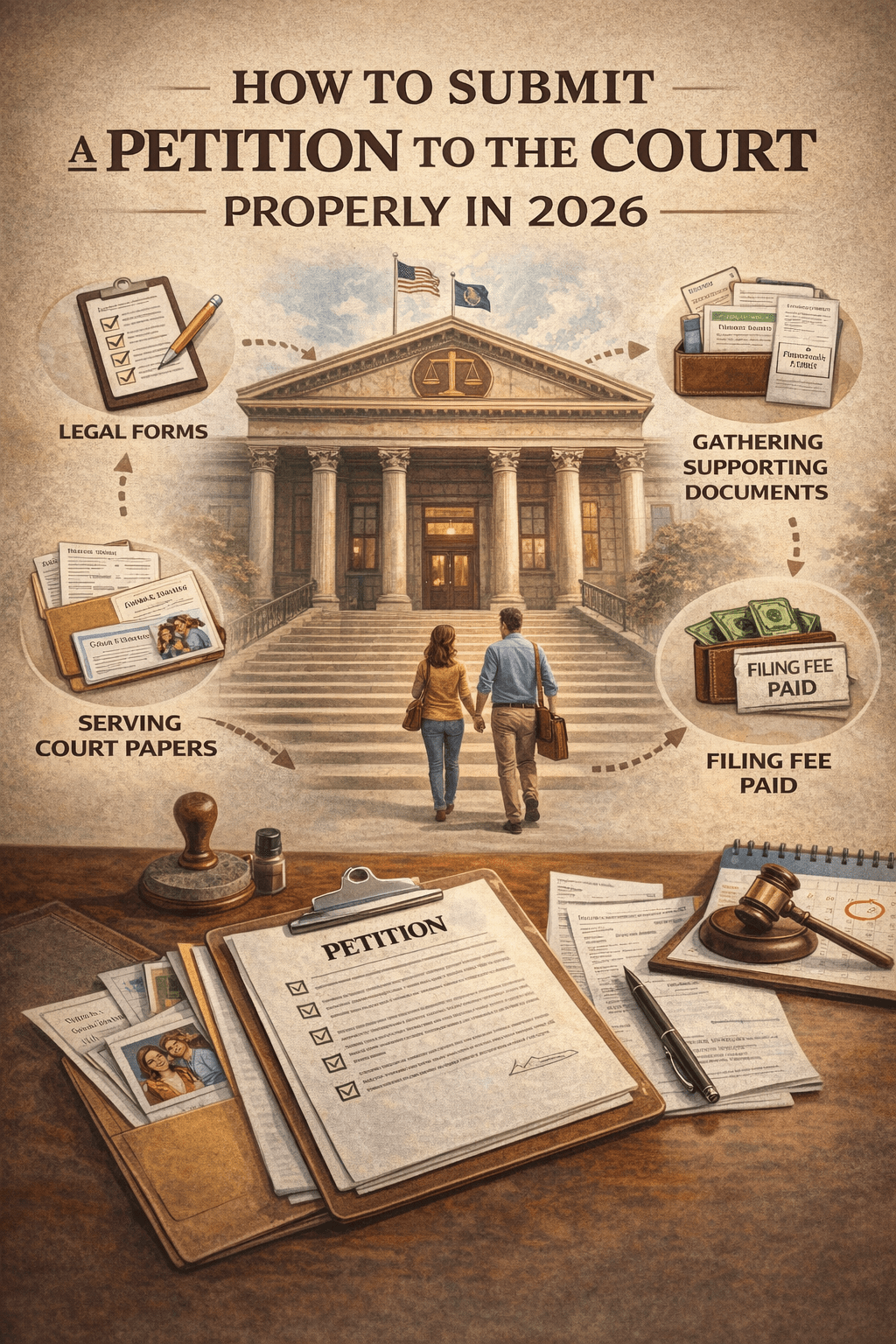
Knowing how to Submit a Petition to the Court correctly is an important first step when starting a legal case or requesting help from the court. A petition is a formal legal document that asks a judge to decide issues such as child custody, divorce, child support, property disputes, or other family or civil matters. Filing your petition properly helps avoid delays and ensures your case is reviewed smoothly.
The court petition process usually involves preparing legal forms, gathering supporting documents, paying filing fees, and submitting paperwork to the correct court jurisdiction. In many cases, petitioners must also serve court papers to the other party and attend scheduled court hearings. Understanding court filing procedures, deadlines, and documentation requirements can make the process less stressful. In this guide, we will walk through the steps, common mistakes to avoid, and practical tips to help you successfully begin your legal case with confidence.
Table of Contents
What is a Petition?
A court petition is a formal written request for legal action or remedy. This legal request is submitted to begin a legal process and may seek a ruling, an injunction, compensation, or another type of legal remedy.
The primary purpose of a petition is to bring a matter to the court’s attention, asking for a legal determination or relief. A petition could involve a wide range of legal issues, from a simple request for a divorce to challenging a decision made by a government agency.
The petition serves as the framework that lays out the legal issues, facts, and desired outcomes that the petitioner (the person filing the petition) seeks from the court.
Types of Petitions
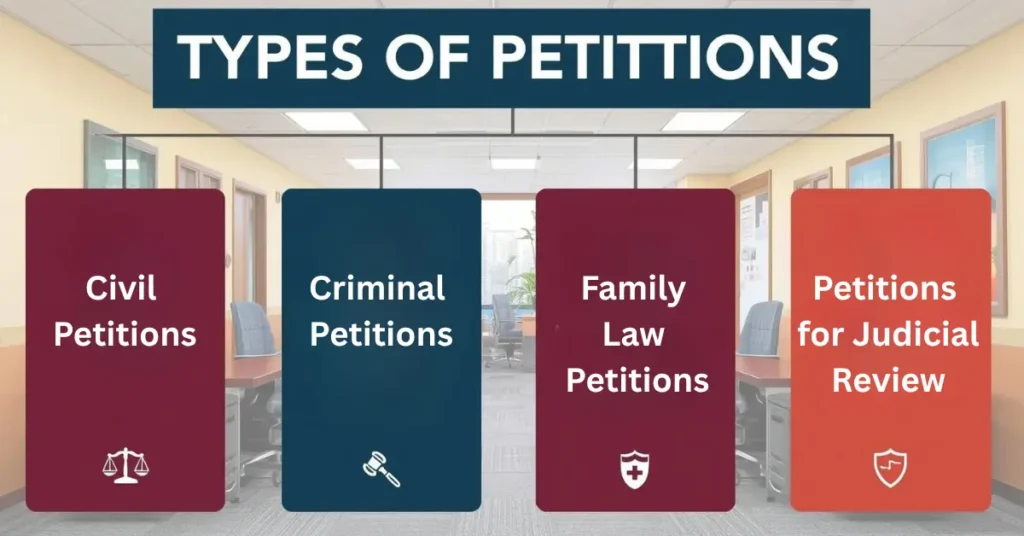
Civil Petitions
These involve disputes between individuals, businesses, or organisations, typically related to property, contracts, personal injury, or tort claims. Examples include personal injury cases, breach of contract disputes, or property claims. In some situations, questions arise, such as: can a power of attorney change property titles?
Family Law Petitions
This category includes petitions filed in family courts, often addressing matters such as divorce, child custody, child support, or restraining orders. These petitions follow state-specific family law codes, which govern legal issues related to marriage, divorce, and child welfare.
Criminal Petitions
Criminal petitions can be filed by individuals seeking post-conviction relief, including motions to vacate convictions, appeals, or requests for sentence reductions.
Petitions for Judicial Review
These petitions are filed when an individual or entity wishes to challenge an action taken by a government agency or a lower court decision. Judicial review is a vital process that ensures administrative choices adhere to the law and is just and reasonable.
Related terms to a petition include filing, jurisdiction, legal action, petitioner’s rights, and petitioner’s responsibilities. These terms represent the rights and duties involved in the petition process, such as the right to request relief and the responsibility to provide clear and accurate information.
Key Components of a Petition
A petition serves as the formal legal request for action by the court, and certain essential components must be included to ensure that it complies with legal standards and can be accepted by the court.
Caption and Court Information
The caption of the petition includes essential identifying information. This typically involves naming the court where the petition is filed, the case number (if already assigned), and the names of the parties involved. The court information helps the court identify the case and link the petition to the correct docket.
Introduction/Title
Petition titles must properly state the request. For example, a petition for custody might be titled “Petition for Custody of Minor Child.” This clear labelling is necessary to help the court understand the nature of the request at the outset.
Statement of Jurisdiction
Here’s why the court can hear and rule on the case. Jurisdiction refers to the court’s power over the subject matter of the petition and the parties involved. A statement of jurisdiction helps establish that the court has the legal authority to decide the matter.
Facts and Allegations
The petition must clearly outline the facts of the case, explaining what led to the petitioner’s request for relief. The facts must be relevant and legally sufficient to support the legal claim. For example, in a divorce petition, the petitioner would include details about the marriage, the separation, and any grounds for divorce.
Relief Requested
The petitioner must clearly specify what action or remedy they are asking the court to grant. This might include specific actions like awarding custody, ordering child support, or issuing an injunction. The relief requested should be specific and directly tied to the facts presented.
Signature and Verification
The petitioner must sign a petition and often requires notarization or verification under penalty of perjury. This swears the petitioner to the petition’s truthfulness.
Supporting Documents
Any evidence or documents that support the petitioner’s claim should be attached. This could include contracts, medical records, witness statements, or other relevant documentation. For example, a family law petition may require proof of income for child support calculations or evidence of abuse in a protection order petition.
Steps to File a Petition
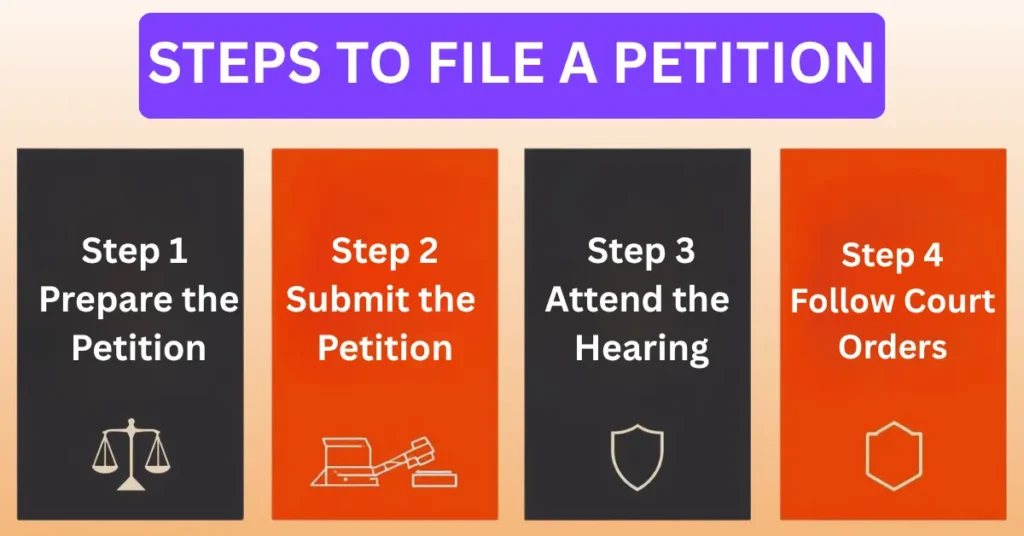
The process of submitting a petition involves several key steps, from preparing the petition to submitting it to the court. Each step is essential to ensure the petition is filed correctly and can be processed by the court.
Step 1: Prepare the Petition
Creating a petition is the first step. Courts often provide sample petition forms or guidelines that help individuals make the necessary documents. These forms should be filled out accurately and should include all the required information, such as the caption, facts, and relief requested.
Ensure the petition has the necessary information for judicial processing. The information provided should be accurate and clear to avoid unnecessary delays or the risk of the petition being dismissed. State-specific rules must also be considered, as different states have different formatting and filing requirements.
Step 2: Submit the Petition
The right court must receive completed petitions. This could be a state court, federal court, or a specialised court (e.g., family court or probate court). When submitting the petition, the petitioner needs to ensure it is filed in the correct jurisdiction based on the legal issue and parties involved.
In some cases, petitioners can electronically file (e-file) their petitions through the court’s website, while in other instances, a physical submission is required. Court fees may also be needed, and these fees can vary depending on the court and the type of case being filed. In some cases, fee waivers may be available for low-income petitioners.
Proof of Service: After submitting the petition, the petitioner must ensure that it is served on the other party. Service refers to the process of formally notifying the other party (defendant/respondent) that a petition has been filed. Service must follow specific rules and can be done through personal service, certified mail, or other approved methods.
Step 3: Attend the Hearing
Courts usually schedule hearings after petition filing and service. The petitioner should be prepared for the hearing by gathering all necessary documents, such as evidence, contracts, financial records, and witness testimonies. This documentation is crucial to support the claims made in the petition.
A judge may hear the petitioner’s arguments. The petitioner may need to answer questions and provide further details. It is important to be well-prepared to present a clear, compelling case to support the relief requested.
Step 4: Follow Court Orders and Judgments
Once the court issues a decision, the petitioner must comply with any orders made. For example, if the court awards custody or financial support, the petitioner must follow those orders, which may include making payments or complying with visitation schedules.
The court’s ruling is legally binding, and failure to comply with court orders may result in additional legal consequences. Therefore, it is essential to adhere to all judgments and ensure that any actions required by the court are carried out.
Common Mistakes to Avoid When Filing a Petition
Filing a petition requires attention to detail, and there are several common mistakes that petitioners should avoid.
Incomplete or Incorrect Information
Failing to include all required details or providing inaccurate information can delay the process or cause the petition to be dismissed. Include all relevant facts and reliable, up-to-date data.
Failure to Serve the Petition
Proper service is crucial to petitions. If the petition is not served on the other party correctly, the court may refuse to proceed with the case. Double-check that the service is completed correctly and within the prescribed time.
Not Following Local Rules
Each court has its own set of rules regarding filing petitions. Failing to follow the local rules for submission, formatting, and service can lead to delays, rejections, or dismissal of the petition.
Not Providing Sufficient Evidence
Without proper documentation and evidence to support the petitioner’s claims, the petition is less likely to succeed. Be sure to gather all relevant evidence, such as contracts, financial records, or testimonies, to make a compelling case.
Legal Framework and Important Statutes
When considering how to submit a petition to the court, understanding the legal framework is essential. Filing a petition is a formal process, and it must adhere to specific rules and procedures dictated by both federal and state laws.
These rules not only guide the filing process but also ensure that the court can assess the petition properly.
Federal court petitions are governed by the FRCP. According to Rule 3 of the FRCP, a civil action might begin with a court complaint or petition.
This rule ensures that anyone seeking legal action has a clear and recognised path to initiate their case within federal jurisdiction. The FRCP is crucial in setting the standard procedure for federal civil cases, including petitions.
However, state-specific rules often differ from federal guidelines. Each state in the U.S. has its own laws regarding the filing of petitions, and these can vary significantly depending on the type of case.
For instance, in New York, the New York State Courts provide specific guidance for petitioners filing cases in family court, detailing the format and necessary documentation required.
Additionally, the type of petition plays a major role in the specific rules that apply. For example, a petition for family law matters such as divorce or child custody might need to reference specific legal statutes, such as the Uniform Child Custody Jurisdiction and Enforcement Act (UCCJEA).
The UCCJEA provides a uniform legal framework for courts to determine jurisdiction in cases of interstate child custody disputes, ensuring that the custody decision is made in the child’s best interests, no matter where the parents live.
Another significant statute is the Violence Against Women Act (VAWA), which protects individuals seeking protection orders from domestic abuse. Petitioners seeking relief under VAWA must file their petitions following the act’s guidelines.
Additionally, in cases involving minors, petitioners may need to file a child abuse report if abuse is suspected or has occurred as part of ensuring the safety and well-being of the child.
Moreover, many states have their own state-specific divorce laws, which will dictate the procedures and requirements for filing a divorce petition.
Understanding these frameworks is crucial since violating jurisdictional norms or legislative requirements might delay or dismiss the petition. Therefore, knowing state-specific norms and relevant laws will greatly boost petition-filing chances.
Legal Summary & Guidance
In conclusion, filing a petition with the court is the initial step in legal action. It is crucial to conflict settlement and legal claims.
However, petition filing involves specific dates, correct procedures, and reliable information, making it complicated. Petitioners must thoroughly grasp and obey the legal criteria since any departure or error in these areas can dismiss the case. A qualified attorney is recommended to ensure the petition is correctly submitted and has the best possibility of success. A lawyer can help the petitioner fill out forms appropriately and meet deadlines.
They can also explain court procedures and help with family law, criminal law, and civil petitions. For example, understanding how Texas criminal harassment laws work can be crucial if the petition relates to a harassment case.
Legal help is available for those who struggle with the court procedure. Many jurisdictions provide fee exemptions and public legal assistance to low-income petitioners, ensuring justice for all.
References:
- United States Courts – Guide to Filing a Case in Federal Court
- Legal Information Institute (Cornell Law School) – Civil Procedure Overview
- American Bar Association – How Courts Work Resources
- Nolo – Filing a Civil Lawsuit: Steps and Legal Process Guide
- FindLaw – Court Procedures and Filing Legal Documents Guide
- U.S. Department of Justice – Court Process Overview
- California Courts Self-Help Guide – Filing Court Forms
- UK Government Judiciary – Court and Tribunal Procedures
- LawHelp.org – Filing Legal Papers in Court Guide
- Federal Judicial Center – Introduction to the Federal Court System