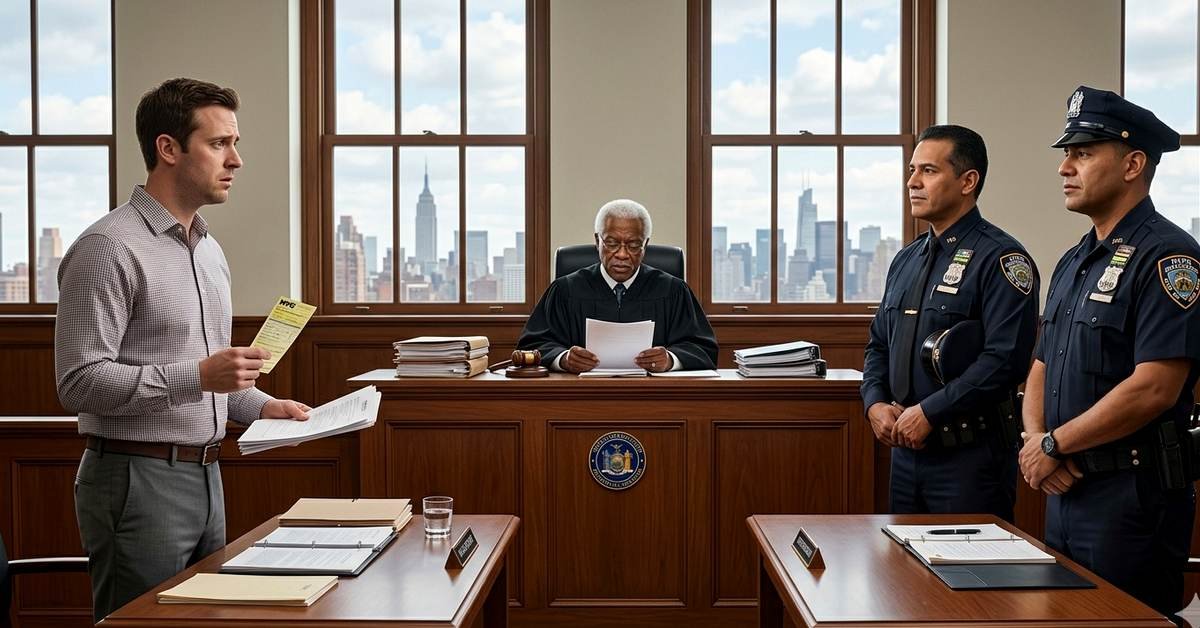
Getting a traffic ticket in New York City can feel stressful. One of the first questions many drivers ask is simple: Police Officers Show Up to Traffic Court in NYC?
The short answer: Sometimes yes, sometimes no. But the full explanation is more detailed — and important for your case.
Let’s break it down in plain English so you know exactly what to expect.
Table of Contents
The Role of Police Officers in Traffic Court
In NYC, police officers are integral to traffic court proceedings. When a driver contests a ticket, the officer who issued it is generally required to appear in court to present their testimony. Their testimony serves as a direct account of the incident, providing essential information that can influence the judge’s decision.
A police officer’s presence in court significantly impacts the case outcome. If the officer attends and provides solid evidence, the ticket is more likely to be upheld. However, if the officer fails to appear, the ticket is often dismissed, or penalties may be reduced depending on other available evidence.
How NYC Traffic Court Works
The NYC traffic court functions similarly to other court systems in the U.S., but with specific nuances related to traffic violations. When a driver receives a ticket, they have two options: pay the fine or contest it in court. If they opt for the latter, a court date is set. On that day, both the driver and the officer who issued the ticket are required to appear.
Officers are scheduled for court dates as part of their routine duties. These schedules are typically coordinated well in advance, ensuring that officers can attend their court dates while still fulfilling their regular patrol duties.
In many cases, officers are given specific days or time blocks to attend court, helping to keep the court calendar running smoothly. The high volume of traffic cases in NYC means that efficiency is key, and this scheduling system plays a crucial role in managing the court’s workload.
How Often Do Police Officers Appear in NYC Traffic Court?
In NYC, the appearance rate for police officers in traffic court is relatively high. Estimates suggest that over 90% of officers attend their scheduled court dates. This high attendance rate can be attributed to the structured systems in place, which ensure that officers are notified in advance of their obligations.
The sheer volume of traffic cases in NYC also plays a significant role in the frequency of court appearances. Given the number of cases, officers often have court dates scheduled as part of their regular duties, making it a routine part of their work.
Factors Influencing Police Attendance
While the attendance of police officers is generally reliable, there are several factors that may prevent them from showing up for a scheduled court date. Some of the most common factors include:
- Court Scheduling
Officers are assigned specific days for court appearances, and these dates are coordinated with their patrol schedules.
- Officer Availability
Officers who are on vacation, dealing with illness, or responding to an emergency may not be able to attend their court hearings.
- Department Policies
Different police departments have varying policies regarding officer attendance at court. Some departments may prioritize certain cases over others.
- Emergencies
Law enforcement officers often deal with emergencies. In these cases, they may not be able to attend their court obligations.
Why Don’t Police Show Up to Traffic Court More Often?
Despite the high attendance rate, there are instances where officers miss their court dates. The reasons typically involve unavoidable circumstances, such as:
- Sickness
Like any professional, officers may become ill and be unable to attend their court hearing.
- Emergencies
Law enforcement officers are often called to handle emergencies, which may conflict with their court schedule.
- Vacations
Officers, like any other employee, are entitled to time off, and they may not be available for court during these periods.
- Injuries
In cases where an officer is injured and unable to perform their duties, they may miss court as well.
These instances, while not common, do happen. However, even when an officer misses a scheduled appearance, the case may still be rescheduled, or the ticket may be dismissed depending on the specifics of the case.
Impact of Officer Absence on Case Outcomes
When an officer fails to appear in traffic court, it can have a significant impact on the case. In most situations, if the officer does not show up to court, the judge may dismiss the ticket entirely. The officer’s testimony is often a key element of the prosecution’s case, and without it, the defendant is much more likely to succeed in contesting the ticket. This is why many drivers who wonder, can someone fix and ticket this, are really asking whether a missed court appearance might work in their favor.
Even when the officer attends, the outcome still depends on the strength of the defendant’s defense, the evidence presented, and the judge’s discretion. A defendant can challenge the officer’s testimony, especially if there are inconsistencies, missing documentation, or conflicting evidence that raises reasonable doubt.
Tips for Contesting Traffic Tickets
If you are planning to contest a traffic ticket in NYC or elsewhere, here are some practical tips to increase your chances of success:
- Check for Officer Attendance
It’s worth checking if the officer is likely to attend court. Their absence can drastically improve your chances of getting the ticket dismissed.
- Gather Evidence
Photographs, videos, and eyewitness accounts can provide strong evidence to support your case.
- Consider Legal Representation
In more complex cases, hiring an attorney can significantly improve your chances of success.
- Challenge the Officer’s Testimony
Even if the officer attends court, you can challenge their testimony by pointing out inconsistencies or presenting counter-evidence.
Understanding your rights and the legal process is key to contesting a traffic ticket effectively.
Legal Summary & Guidance
If you’re wondering whether an officer will show up for your hearing, the honest answer is: often, yes — but not always.
Each case depends on:
- The type of violation
- The officer’s schedule
- Court workload
- Administrative policies
Your best strategy isn’t to rely on the officer missing court — it’s to prepare properly and understand the process.
Traffic court in NYC is structured, strict, and different from many other states. Knowing what to expect puts you in control and reduces surprises.
Best Advice
As you prepare to contest a traffic ticket, always remember that knowledge is your greatest ally. Know the process, gather your evidence, and don’t hesitate to seek legal advice if needed. And most importantly, remain calm and collected in court; a confident and respectful demeanor can make all the difference.