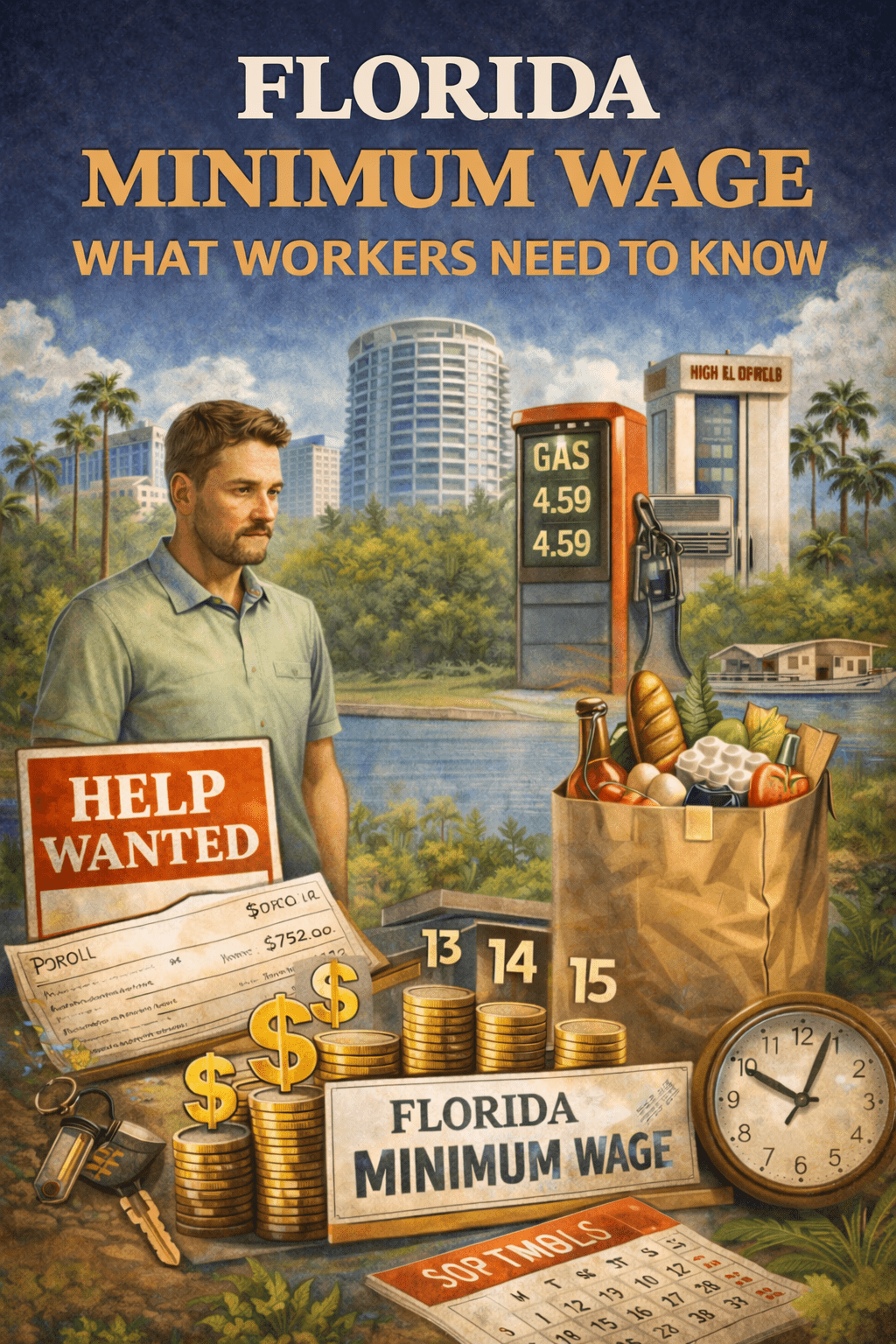
Florida minimum wage is important for workers, job seekers, and families trying to manage living expenses in the state. Minimum wage laws affect hourly pay, job choices, and overall quality of life, especially as housing and living costs continue to change across Florida.
In this guide, we’ll explain Florida’s current wage rates, what changes are expected and answer common questions about income, affordability, and job opportunities. Whether you’re moving to Florida or already living there, knowing how minimum wage affects your earnings can help you plan better for your future.
Table of Contents
What Is Florida’s Minimum Wage?
Florida voters approved a gradual increase in minimum wage through a constitutional amendment that raises wages step by step each year.
As scheduled:
- Florida’s minimum wage reached $12 per hour in 2023
- Increased to $13 per hour in 2024
- Will rise to $14 per hour in 2025
- Expected to reach $15 per hour in 2026
Tipped employees receive a lower direct wage, but tips must make up the difference to reach minimum wage.
This gradual increase is designed to help workers keep up with inflation while giving businesses time to adjust payroll expenses.
Is Florida’s Minimum Wage $15?
Not yet—but it’s getting there.
Many people assume Florida already pays $15 per hour, but that rate is part of a scheduled future increase. The state is moving toward $15 gradually, with each September seeing a wage increase.
So, while $15 per hour is planned, it will officially apply in 2026, not earlier.
Workers should keep track of annual updates since wage adjustments typically happen every fall.
Is $17 an Hour Good in Florida?
Whether $17 per hour is considered good income depends on where you live and your personal expenses.
At $17 per hour:
- Full-time income equals roughly $35,000 annually before taxes
- This is higher than the state minimum wage
- It can cover living costs in smaller or less expensive cities
- However, it may feel tight in large metro areas
Cities like Miami, Tampa, Orlando, and Fort Lauderdale have higher rent and living costs. Housing, insurance, transportation, and healthcare expenses quickly add up.
For a single person, $17 per hour can provide basic stability, but supporting a family or living in high-cost neighbourhoods may still be challenging.
Is $20 an Hour Good in Florida?
Earning $20 per hour generally offers more financial flexibility.
At full-time work, that equals around $41,000 per year before taxes. This income allows many workers to cover:
- Rent or mortgage payments
- Utilities and groceries
- Transportation expenses
- Healthcare costs
- Some savings or entertainment spending
However, affordability still varies widely across Florida. Coastal cities and tourist-heavy areas often have higher housing prices.
For families or single parents, $20 per hour may still require careful budgeting, but it is significantly more comfortable than minimum wage earnings.
Can I Retire in Florida on $3,000 a Month?
Many retirees consider Florida because there is no state income tax, and the climate is attractive year-round.
Living on $3,000 per month (about $36,000 annually) is possible in Florida, but lifestyle choices and location matter.
Retirement on this budget works best if:
- Housing costs are low or mortgage-free
- Healthcare expenses are manageable
- Living outside major tourist cities
- Maintaining moderate lifestyle expenses
Smaller cities and inland communities often offer lower housing costs than coastal areas.
Retirees should also consider property taxes, insurance costs, and rising medical expenses when planning their move.
What Jobs Pay $30 an Hour in Florida?

Jobs paying $30 per hour or more typically require specialised skills, training, or certifications. Many industries in Florida offer strong earning potential.
Examples include:
Healthcare Careers
- Registered nurses
- Radiology technicians
- Respiratory therapists
- Dental hygienists
Skilled Trades
- Electricians
- HVAC technicians
- Plumbers
- Elevator repair technicians
Technology & IT Jobs
- Software developers
- Cybersecurity specialists
- Network engineers
Construction & Engineering Roles
- Construction managers
- Civil engineering technicians
- Project supervisors
Transportation Careers
- Commercial pilots
- Specialised truck drivers
- Marine captains
Vocational training or certifications often allow workers to reach these wage levels faster than traditional four-year degrees.
Cost of Living and Minimum Wage Reality
Minimum wage alone often struggles to match modern living costs, especially with rising rent and insurance expenses in Florida.
Key living cost factors include:
- Housing prices rising in major cities
- Higher car insurance rates
- Increased healthcare costs
- Food and utility price increases
Many workers seek higher-paying opportunities, multiple income sources, or skill development to stay financially secure.
Understanding local living costs helps workers choose cities that better match their income.
Tips to Earn More Than Minimum Wage in Florida
Workers aiming to improve income prospects can consider:
Learning Skilled Trades
Trade schools offer fast training for high-demand jobs.
Certification Programs
Healthcare, IT, and logistics certifications boost earnings quickly.
Side Income Opportunities
Freelancing, delivery services, and remote work add extra income.
Career Advancement
Gaining experience and pursuing promotions increases hourly wages.
Investing in skills can significantly improve long-term earning potential.
How Florida Minimum Wage Impacts Businesses
Wage increases affect employers, too. Businesses must balance labour costs while maintaining profitability.
Some companies adjust by:
- Increasing product or service prices
- Improving employee productivity
- Automating certain tasks
- Offering fewer hours but higher pay rates
Despite challenges, higher wages can improve employee retention and reduce turnover costs.
Further Readings
Final Thoughts on Florida Minimum Wage
The Florida minimum wage continues to rise gradually, aiming to help workers keep pace with inflation and living expenses. While minimum wage jobs provide entry-level opportunities, many workers look toward higher-paying careers for better long-term stability.
Understanding wages, job opportunities, and living costs allows workers and families to plan smarter financial futures. Whether you are starting a career, relocating, or planning retirement, knowing what income levels truly support your lifestyle in Florida is key to making confident decisions.