When overwhelming debt leaves you feeling trapped, a Chapter 7 attorney can be the difference between a clean financial reset and a costly legal mistake.
Chapter 7 bankruptcy is designed to give honest debtors a fresh start—but it is also governed by strict federal rules, detailed paperwork, and close court oversight. Filing without proper legal guidance can expose you to case dismissal, loss of property, or even allegations of fraud.
A qualified Chapter 7 attorney does far more than submit forms. They analyse your finances, protect your assets using lawful exemptions, communicate with the bankruptcy trustee, and ensure you receive a valid bankruptcy discharge. In contrast, many people who attempt to file bankruptcy without an attorney discover too late that one small error can undo the entire process.
This in-depth guide explains exactly what a Chapter 7 attorney does, when legal help is essential, how much attorneys charge, and whether filing on your own is ever realistic. Everything here is written for serious readers—no fluff, no fear tactics—just clear, authoritative information grounded in real bankruptcy law and court practice.
Table of Contents
What Does a Chapter 7 Attorney Do?
A Chapter 7 attorney serves as your legal advocate from the moment bankruptcy becomes an option until the court grants your discharge. Chapter 7 is not simply “filling out paperwork.” It is a legal proceeding governed by federal statutes, court rules, and trustee discretion.
Here is what a competent Chapter 7 attorney actually does:
Legal Eligibility Analysis
Before filing, an attorney determines whether you qualify under the means test, which compares your income to state and national medians. Many self-filers misunderstand this test and file cases that are later dismissed or converted, especially when the case involves aspects like Texas Harassment Laws, which require a clear understanding of eligibility.
Asset Protection Through Exemptions
Every state and federal system provides Chapter 7 exemptions that protect certain property. An attorney ensures your home equity, vehicle value, retirement accounts, and personal property are properly exempted. Incorrect exemption claims are one of the most common—and dangerous—errors in pro se filings.
Accurate Petition Preparation
Bankruptcy schedules require complete disclosure of income, debts, assets, expenses, contracts, and prior transfers. A bankruptcy lawyer ensures accuracy and consistency across all forms, reducing red flags for trustees.
Representation at the 341 Meeting
At the mandatory meeting of creditors, the bankruptcy trustee asks questions under oath. Your attorney prepares you, attends the meeting, and handles legal objections if issues arise.
Handling Trustee and Creditor Issues
If the trustee challenges exemptions, requests documents, or suspects improper transfers, your attorney responds legally and strategically. Without representation, filers are often overwhelmed or misled, and they may need to understand the process of Texas Harassment Case Filing if harassment issues arise during the case.
Ensuring a Valid Discharge
The ultimate goal is a lawful bankruptcy discharge. Attorneys monitor deadlines, objections, and post-filing requirements to ensure your case closes correctly. If harassment becomes a concern during the process, a Civil Harassment Restraining Order may also be an important legal step to consider.

Why Hiring a Chapter 7 Attorney Matters More Than Cost
Many people searching online focus on price alone. While cost matters, it should never be the sole deciding factor when choosing a Chapter 7 attorney. Chapter 7 is a one-time legal opportunity—mistakes can permanently cost you assets or bar you from refiling.
Filing With an Attorney vs Filing Alone
| With Attorney | Without Attorney |
|---|---|
| Proper means test analysis | High risk of disqualification |
| Asset protection planning | Property loss common |
| Trustee communication handled | Direct legal pressure |
| Court deadlines monitored | Missed deadlines = dismissal |
| Legal defence if challenged | No protection |
Courts do not give leniency to people who misunderstand the law. Judges and trustees expect compliance regardless of representation status.
The true cost of filing alone often exceeds attorney fees when you factor in:
- Case dismissal
- Lost exemptions
- Forced conversion to Chapter 13
- Refiling delays and additional filing fees
A Chapter 7 attorney is not an expense—it is risk management.
Can You File Chapter 7 Without an Attorney?
Yes, federal law allows individuals to file Chapter 7 without a lawyer. This is known as pro se bankruptcy. However, “allowed” does not mean “advisable.”
When Self-Filing Is Technically Possible
Filing without an attorney may be feasible if:
- You have no assets beyond basic exemptions
- You have simple income sources
- No recent transfers or gifts
- No business ownership
- No prior bankruptcies
Even then, success depends on flawless execution.
Why Most Pro Se Filers Fail
People who file bankruptcy without an attorney frequently make mistakes, such as:
- Incorrect exemption selection
- Underreporting income
- Failing to list all creditors
- Misunderstanding secured debts
- Missing deadlines
Trustees are not there to help you—they are there to enforce the law.
Step-by-Step Overview of Chapter 7 Bankruptcy (Attorney-Led Process)
Filing Chapter 7 bankruptcy is not a single action—it is a legal process governed by federal law, supervised by the bankruptcy court, and enforced by a court-appointed bankruptcy trustee. When guided by a Chapter 7 attorney, each step is handled strategically to reduce risk, protect assets, and ensure a valid discharge. Below is how the process actually works when done correctly.
Step 1: Initial Legal Evaluation and Case Screening
Before any paperwork is filed, a Chapter 7 attorney conducts a comprehensive legal review of your financial situation. This step is critical and often skipped or mishandled by people who try to file on their own.
At this stage, the attorney evaluates:
- Total unsecured and secured debt
- Income sources and stability
- Household size and expense structure
- Asset ownership (home, vehicle, savings, retirement accounts)
- Prior bankruptcy filings
- Recent transfers, gifts, or asset sales
- Pending lawsuits, garnishments, or liens
This legal screening determines whether Chapter 7 is appropriate at all. Many cases that fail do so because filers should never have filed Chapter 7 in the first place. An experienced Chapter 7 attorney identifies these risks before the court does.

Step 2: Mandatory Credit Counselling (Pre-Filing Requirement)
Federal bankruptcy law requires all filers to complete a credit counselling course from an approved agency within 180 days before filing.
An attorney:
- Directs you to legitimate, court-approved providers
- Ensures the certificate is valid and properly filed
- Confirms the course timing complies with court rules
Missing or mishandling this requirement results in automatic case dismissal, regardless of merit.
Step 3: Means Test Calculation and Legal Qualification
The means test determines whether you are legally eligible for Chapter 7 bankruptcy. This test is not a simple income check—it involves IRS standards, allowable expenses, and court interpretations that change over time.
A Chapter 7 attorney:
- Calculates current monthly income correctly
- Applies allowable deductions under federal guidelines
- Accounts for irregular income, overtime, bonuses, or self-employment
- Prevents misclassification that could trigger trustee objections
Self-filers often fail here by underreporting income or misunderstanding expense allowances, leading to dismissal or forced conversion to Chapter 13.
Step 4: Asset Analysis and Exemption Planning
This is one of the most legally sensitive stages of the process.
Every bankruptcy system allows certain property to be protected using Chapter 7 exemptions, but:
- Exemptions vary by state
- Values must be calculated precisely
- Timing matters
- Improper exemption claims invite trustee challenges
A Chapter 7 attorney strategically:
- Identifies all assets, even those you may not consider “property”
- Applies the correct state or federal exemption system
- Values assets defensibly, not optimistically
- Anticipates trustee scrutiny
Without legal planning, filers frequently lose vehicles, tax refunds, or non-exempt equity they could have protected.
Step 5: Preparing and Reviewing the Bankruptcy Petition
The bankruptcy petition consists of dozens of interconnected forms, including schedules, statements, and declarations signed under penalty of perjury.
An attorney ensures:
- Full disclosure of all debts and creditors
- Accurate income and expense reporting
- Correct classification of secured vs unsecured debts
- Disclosure of prior transactions and lawsuits
- Internal consistency across all schedules
Errors here are not “fixable mistakes.” Trustees treat inconsistencies as red flags for fraud or bad faith.
Step 6: Filing the Case and Activating the Automatic Stay
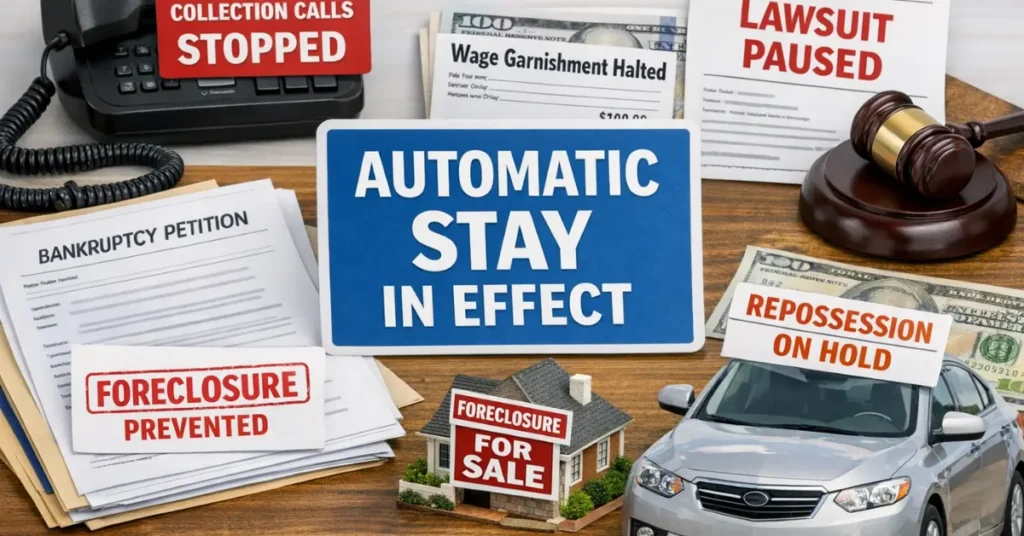
Once the petition is filed with the bankruptcy court, the automatic stay immediately goes into effect. This is one of the most powerful protections in bankruptcy law.
The automatic stay:
- Stops collection calls
- Halts wage garnishments
- Pauses lawsuits
- Prevents foreclosures and repossessions (temporarily)
A Chapter 7 attorney ensures:
- The filing is timed correctly
- Creditors are properly notified
- Stay violations are addressed immediately
Improper filing timing can nullify these protections.
Step 7: Trustee Assignment and Document Submission
After filing, a court-appointed bankruptcy trustee is assigned to your case. The trustee’s role is to:
- Verify the accuracy of your filings
- Identify non-exempt assets
- Ensure legal compliance
Your attorney:
- Submits required documents (tax returns, pay stubs, bank statements)
- Communicates directly with the trustee
- Prepares responses to follow-up inquiries
Self-filers often misunderstand trustee requests or provide incomplete documentation, escalating scrutiny.
Step 8: The 341 Meeting of Creditors
The 341 meeting is a formal proceeding where you answer questions under oath. Although creditors rarely attend, the trustee always does.
A Chapter 7 attorney:
- Prepares you for trustee questioning
- Attends the meeting with you
- Objects to improper or overreaching questions
- Clarifies legal misunderstandings in real time
This meeting is not casual. Statements made here become part of the court record and can affect your discharge.
Step 9: Trustee Review Period and Legal Resolution
After the 341 meeting, the trustee evaluates whether:
- Assets should be liquidated
- Exemptions are valid
- Objections to discharge exist
If issues arise, your Chapter 7 attorney:
- Files legal responses
- Negotiates resolutions
- Defends exemption claims
- Prevents unnecessary asset seizure
Unrepresented filers often lose this phase simply because they do not know how to respond legally.
Step 10: Financial Management Course (Post-Filing Requirement)
Before discharge, you must complete a second course focused on financial management.
Your attorney:
- Ensures timely completion
- Files the certificate correctly
- Prevents last-minute discharge delays
Failure to complete this step results in case closure without discharge.
Why the Attorney-Led Process Matters
Every step above involves legal judgment, not clerical work. The bankruptcy system is designed for compliance, not forgiveness. Trustees and courts expect precision, honesty, and procedural accuracy.
A Chapter 7 attorney does not just file paperwork—they protect your rights, assets, and future at every stage of the process.
How Much Does a Chapter 7 Attorney Cost?
Attorney fees vary based on complexity, location, and risk. Nationally, most Chapter 7 attorney fees range between $1,000 and $3,500.
What Attorney Fees Typically Include
- Eligibility analysis
- Petition preparation
- Court filing
- Trustee communication
- 341 meeting representation
- Discharge monitoring
Why Extremely Cheap Fees Are Risky
Ultra-low prices often mean:
- Limited attorney involvement
- Paralegal-only preparation
- Minimal case review
- No litigation defense
In bankruptcy, cheap representation can be worse than none.
What Happens If You Don’t Use a Chapter 7 Attorney?
Filing Chapter 7 bankruptcy without legal representation may appear manageable on the surface, but in practice, it exposes filers to significant legal, financial, and procedural risks.
Bankruptcy courts are federal courts, and the law does not provide special allowances for people who misunderstand the rules. When you choose to proceed without a chapter 7 attorney, you are held to the same standards as experienced legal professionals—without the benefit of training or courtroom experience.
Below are the most common and serious consequences.
Increased Risk of Case Dismissal
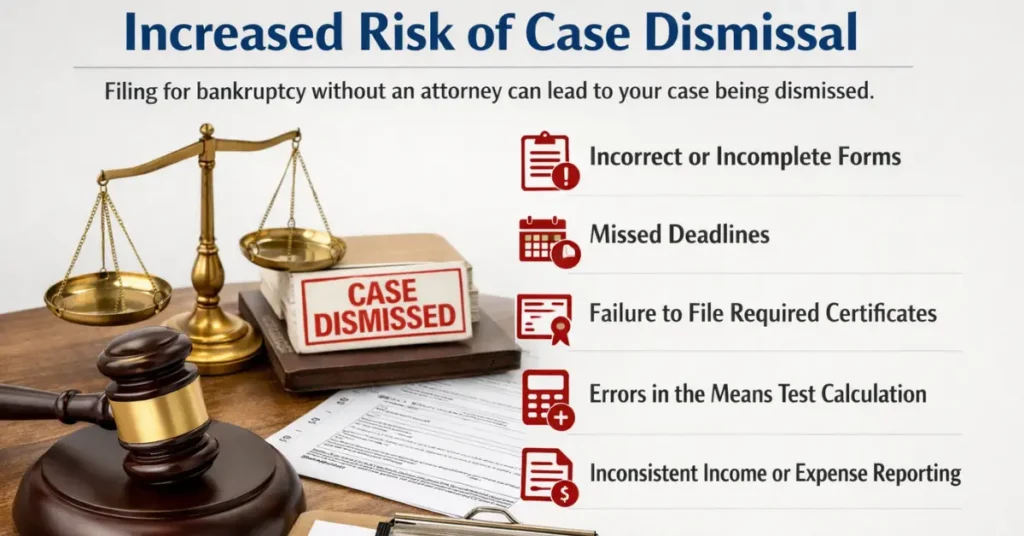
One of the most frequent outcomes for people who file bankruptcy without an attorney is outright case dismissal. Dismissals often occur due to:
- Incorrect or incomplete forms
- Missed deadlines
- Failure to file required certificates
- Errors in the means test calculation
- Inconsistent income or expense reporting
A dismissed case does not erase your debt. Instead, it:
- Wastes your filing fee
- Removes the automatic stay
- Allows creditors to immediately resume collections
- Can limit your ability to refile for months
A Chapter 7 attorney prevents dismissal by ensuring strict procedural compliance from day one.
Loss of Property That Could Have Been Protected
Many people lose property in Chapter 7 not because the law required it, but because exemptions were applied incorrectly. Chapter 7 exemptions are technical, state-specific, and highly sensitive to valuation and timing.
Common property losses among self-filers include:
- Vehicles with miscalculated equity
- Bank account balances at filing
- Tax refunds
- Personal property that exceeded exemption limits by small margins
Once a bankruptcy trustee identifies non-exempt property, it can be liquidated—even if the loss could have been avoided with proper legal planning.
Heightened Trustee Scrutiny and Legal Pressure
Trustees are trained to identify red flags. Pro se filings statistically receive more scrutiny, not less, because errors are common.
Without a Chapter 7 attorney, you must:
- Respond directly to trustee demands
- Understand legal terminology and deadlines
- Provide documentation without guidance
- Defend exemption claims alone
Trustees are not required to explain their rights or correct your mistakes. What feels like a simple request can quickly become a legal dispute.
Forced Conversion to Chapter 13
Many self-filed Chapter 7 cases are converted to Chapter 13—not because conversion was legally required, but because the filer failed to:
- Properly calculate income
- Disclose expenses correctly
- Apply allowable deductions
A forced conversion can lock you into a 3–5 year repayment plan you never intended to enter. A Chapter 7 attorney evaluates this risk before filing and structures the case accordingly.
Risk of Allegations of Fraud or Bad Faith
Bankruptcy fraud does not require criminal intent. It can arise from:
- Omissions
- Inaccurate valuations
- Misunderstood disclosure rules
- Failure to list prior transfers or gifts
Statements in bankruptcy filings and at the 341 meeting are made under oath. Without legal guidance, innocent mistakes can escalate into serious legal allegations, including denial of discharge.
No Legal Defence If Problems Arise
When disputes occur—such as objections to exemptions, motions to dismiss, or trustee challenges—self-filers have no legal shield. At that point, hiring an attorney becomes more expensive and more difficult, and some issues cannot be undone.
A Chapter 7 attorney anticipates problems before they happen and resolves them early, often preventing formal objections entirely.
Long-Term Financial Consequences
The purpose of Chapter 7 is a fresh start. When done incorrectly, the long-term impact may include:
- Debts surviving bankruptcy
- Credit damage without debt relief
- Loss of assets without discharge
- Ineligibility to refile for a set period
These outcomes defeat the entire purpose of filing.
Why Courts Do Not “Help” Self-Filers
Judges, trustees, and court staff are prohibited from giving legal advice. While procedural instructions may be provided, legal interpretation is your responsibility alone if you proceed without counsel.
This is why courts consistently encourage filers to consult a Chapter 7 attorney, especially when assets, income complexity, or prior filings are involved.
You can also go with the Chapter 7 bankruptcy dismissal reasons
Special Situations Where a Chapter 7 Attorney Is Critical
Seniors and Retirees
Retirement income, Social Security exemptions, and asset protection require careful handling.
Homeowners
Equity calculations and exemption strategy determine whether your home is protected.
Self-Employed Individuals
Business income, expenses, and assets dramatically increase complexity.
Prior Bankruptcy Filers
Waiting periods and discharge eligibility rules apply strictly.
Pending Lawsuits or Garnishments
Timing errors can eliminate bankruptcy protections entirely.
In all these cases, a Chapter 7 attorney is not optional—it is essential.
How to Choose the Right Chapter 7 Attorney
Choosing a Chapter 7 attorney is one of the most important financial decisions you will make. Chapter 7 bankruptcy is typically a once-in-a-lifetime legal remedy, and the attorney you choose directly affects whether your case is approved, how your assets are treated, and whether you receive a clean discharge without complications.
The right attorney is not simply someone who “files paperwork.” A qualified Chapter 7 attorney is a legal strategist, risk manager, and courtroom advocate. Below are the criteria that actually matter—based on how bankruptcy courts operate, not how law firm websites market themselves.
Look for:
- Extensive Chapter 7 experience
- Local court familiarity
- Transparent fee structure
- Clear communication
- Positive client reviews
- Licensed and in good standing
Avoid attorneys who promise outcomes or rush consultations.
Look for Deep, Specific Chapter 7 Experience
Not all bankruptcy attorneys focus equally on Chapter 7. Some primarily handle Chapter 13 repayment plans or business reorganisations. You want an attorney who regularly files Chapter 7 cases and understands trustee behaviour, exemption trends, and local court expectations.
Ask directly:
- How many Chapter 7 cases do you file each year?
- How often do your cases receive trustee objections?
- Have you handled asset-involved Chapter 7 cases?
An experienced Chapter 7 attorney recognises problems before filing and structures cases to avoid them.
Verify Local Court and Trustee Familiarity
Bankruptcy law is federal, but practice is local. Trustees, judges, and court procedures vary by district. An attorney familiar with your local bankruptcy court understands:
- How specific trustees interpret exemptions
- Which valuation methods are scrutinized
- How aggressively do trustees pursue non-exempt assets
This local insight cannot be learned from forms or software. It comes from repeated courtroom experience.
Evaluate Transparency in Attorney Fees
A trustworthy Chapter 7 attorney is clear and upfront about fees. You should understand:
- What the fee includes
- What services cost extra (if any)
- When payment is due
- Whether payment plans are available before filing
Be cautious of attorneys who advertise unusually low fees without explaining what is excluded. In many cases, low fees correlate with minimal legal involvement.
Assess How Thorough the Initial Consultation Is
A meaningful consultation is a strong EEAT signal. During your first meeting, the attorney should:
- Ask detailed questions about income, assets, and debts
- Review potential risks honestly
- Explain both the benefits and limitations of Chapter 7
- Discuss alternatives if Chapter 7 is not appropriate
If the consultation feels rushed or scripted, that is a warning sign. A competent Chapter 7 attorney does not promise outcomes—they explain probabilities and risks.
Confirm Who Actually Handles Your Case
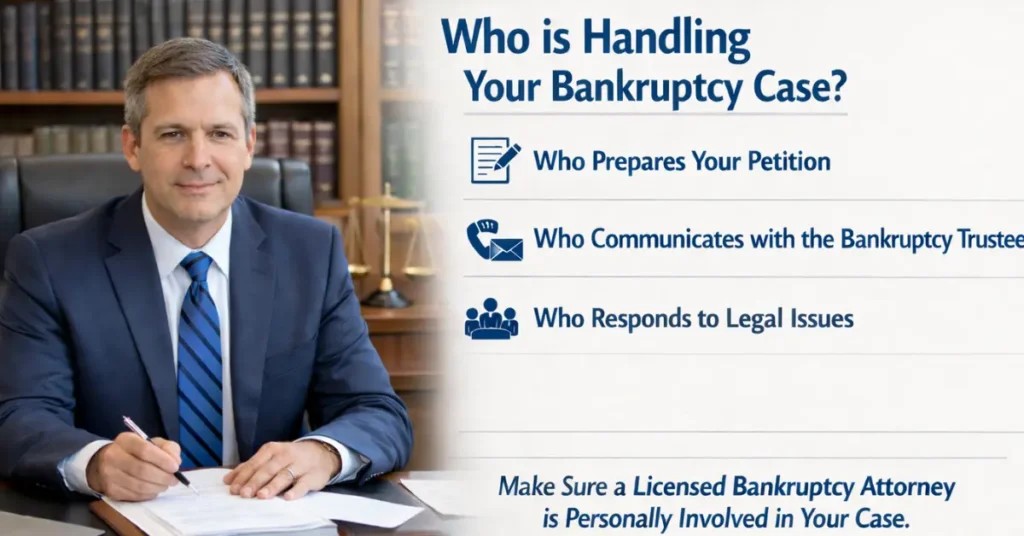
In some firms, initial consultations are handled by attorneys, but the case itself is processed by non-lawyer staff. While support staff are valuable, you should know:
- Who prepares your petition
- Who communicates with the bankruptcy trustee
- Who attends the 341 meeting with you
- Who responds if a legal issue arises
You deserve clarity on whether a licensed bankruptcy lawyer is actively involved throughout your case.
Review Professional Credentials and Standing
Basic but essential checks include:
- Active license in good standing
- Bankruptcy law focus (not general practice only)
- No history of disciplinary action
Membership in bankruptcy-focused legal associations or continued education in consumer bankruptcy law is a positive signal of ongoing competence.
Pay Attention to Communication Style and Accessibility
Bankruptcy is stressful. Your attorney should be accessible, responsive, and clear in communication. Consider:
- How quickly calls or emails are returned
- Whether explanations are understandable
- Willingness to answer questions without pressure
An effective Chapter 7 attorney ensures you understand the process, your responsibilities, and potential outcomes—before problems arise.
Avoid Unrealistic Guarantees and Pressure Tactics
No ethical attorney guarantees:
- Approval
- Asset protection in every case
- Discharge without review
Be wary of anyone who promises results without first reviewing your full financial picture. Bankruptcy outcomes depend on facts, disclosures, and trustee review—not marketing claims.
Understand the Attorney’s Approach to Risk Management
A strong Chapter 7 attorney focuses on preventing problems, not reacting to them. This includes:
- Pre-filing asset analysis
- Careful timing of the filing date
- Full disclosure to avoid fraud allegations
- Preparing clients thoroughly for trustee questioning
This preventive approach is often the difference between a smooth case and months of legal complications.
Further Readings You May Need
California Family Court’s Emergency Ex Parte Legal Needs
Everything You Should Know About Contempt Motions
FAQs:
How to file Chapter 7 without an attorney?
You can file Chapter 7 without an attorney by submitting all required federal bankruptcy forms directly to the court, completing mandatory credit counselling, passing the means test, attending the 341 meeting, and responding to the bankruptcy trustee. However, without legal guidance, errors in exemptions, income reporting, or asset disclosure often result in dismissal or loss of property.
How to file a Chapter 7 bankruptcy without an attorney?
Filing without an attorney requires acting as a pro se bankruptcy filer. You must prepare and file accurate schedules, correctly apply Chapter 7 exemptions, and comply with strict court deadlines. Courts do not offer legal advice, and mistakes are not excused due to lack of counsel.
How much does an attorney charge for a Chapter 7?
A Chapter 7 attorney typically charges a flat fee ranging from $1,000 to $3,500 depending on case complexity, location, and asset risk. Fees usually cover case analysis, filing, court representation, and trustee communication.
Why did my Chapter 7 trustee hire an attorney?
A trustee may hire an attorney when there are suspected asset concealment, fraudulent transfers, exemption disputes, or creditor objections. This increases legal scrutiny and often puts unrepresented filers at a disadvantage.
Can I file Chapter 7 without an attorney?
Yes, but it is legally risky. Filing without a bankruptcy lawyer significantly increases the chance of dismissal, delayed discharge, or loss of protected assets due to procedural errors.
Can you file Chapter 7 without an attorney?
You can, but bankruptcy courts strongly recommend legal representation because Chapter 7 involves federal law, complex exemptions, and trustee oversight.
Do I need an attorney to file Chapter 7?
While not legally required, hiring a Chapter 7 attorney is strongly advised to ensure compliance with bankruptcy law, maximise asset protection, and secure a successful discharge.
How much are attorney fees for Chapter 7?
Attorney fees for Chapter 7 are typically paid before filing and vary based on case complexity, asset exposure, and whether litigation risks exist.
How to chapter 7 bankruptcy attorney?
To hire a Chapter 7 bankruptcy attorney, research licensed local attorneys, review experience with Chapter 7 cases, confirm transparent fees, and schedule a consultation to assess your eligibility and risk level.
Can a senior file Chapter 7 without an attorney?
Seniors can file without an attorney, but age-specific income sources, retirement exemptions, and asset protection rules make legal guidance especially important.
Can attorney fees be claimed in Chapter 7?
Attorney fees incurred before filing cannot be discharged. However, fees related to post-filing legal services may sometimes be addressed separately depending on the case structure.
Wrap-Up: Is Hiring a Chapter 7 Attorney Worth It?
Chapter 7 bankruptcy is not just a financial decision—it is a legal proceeding with permanent consequences. Throughout this guide, we’ve examined the process from every critical angle: eligibility, asset protection, trustee scrutiny, court requirements, attorney selection, and the real risks of filing without legal representation.
The takeaway is clear: while the law allows you to file on your own, Chapter 7 is designed to be navigated with professional legal guidance.
The rules are strict, the paperwork is unforgiving, and the margin for error is extremely small. Courts do not correct mistakes, trustees do not provide advice, and innocent errors can result in dismissed cases, lost property, or denied discharges.
A qualified Chapter 7 attorney brings more than form preparation. They provide:
- Accurate eligibility analysis under the means test
- Strategic use of exemptions to protect assets
- Direct communication with the bankruptcy trustee
- Legal defence if objections arise
- Proper timing and filing to activate and preserve the automatic stay
- Assurance that your discharge is valid and enforceable
Equally important, a good attorney helps you avoid irreversible mistakes before they happen, rather than trying to fix problems after the court has already acted.
For readers weighing cost versus risk, it’s important to view attorney fees in context. The cost of legal representation is often far less than the financial damage caused by a dismissed case, forced Chapter 13 conversion, or unnecessary asset liquidation. Bankruptcy is meant to provide a fresh start—not create new problems.
If you are considering Chapter 7, the smartest step is not rushing to file, but seeking informed legal guidance first. The right chapter 7 attorney can ensure that when you use this powerful legal tool, it works exactly as the law intended—cleanly, lawfully, and permanently.
References
- Investopedia – Chapter 7 Bankruptcy: What It Is, How It Works, Ramifications – A detailed, trusted financial overview of Chapter 7 bankruptcy basics. (Investopedia)
Great for linking to process explanations. - The Simple Guide to Chapter 7 Bankruptcy (attorneys.media) – Step-by-step breakdown of filing, automatic stay, 341 meeting, and discharge process. (attorneys.media)
Useful for linking to the chapter process and requirements. - FindLaw – Chapter 7 Bankruptcy Law – Authorised legal explanation of Chapter 7, filing fees, exemptions, and procedures. (FindLaw)
Excellent authoritative resource to cite legal standards. - NJ Bankruptcy Court – How to File a Chapter 7 Bankruptcy Case (Attorney Resource Guide) – Official procedural document from a federal bankruptcy court. (njb.uscourts.gov)
Strong government/legal authority.
- Mitten Law – Bankruptcy Attorney: How to Choose the Right Lawyer – Practical attorney vetting checklist (credentials, reviews, licensing). (Mitten Law)
Great citation for your “How to Choose the Right Chapter 7 Attorney” section. - ExpertLawFirm – How To Choose The Right Lawyer for Chapter 7 Bankruptcy – Tips on reputation, peer reviews, client feedback, and fees. (Orange County DUI Attorneys)
Useful for linking to professional reputation signals. - FleysherLaw – How to Find a Great Chapter 7 Attorney – Insight on experience, fee structures, and firm involvement. (Fleysher Law)
Supports your attorney evaluation advice. - CanB Bankruptcy Court – Guidelines for Legal Services to be Provided by Debtors’ Attorney – Ethical and procedural duties of a bankruptcy attorney. (canb.uscourts.gov)
Strong legal support for attorney roles.
- Ascend Bankruptcy – How To File For Bankruptcy Without A Lawyer – Step-by-step for self-filing and its difficulties. (ascendbankruptcy.com)
Ideal for linking to your “can you file without an attorney?” section. - U.S. Bankruptcy Court Pamphlet (Missouri Eastern, Federal) – Explains that courts cannot give legal advice and self-filers risk losing protections. (moeb.uscourts.gov)
Government confirmation of difficulty in filing pro se. - Nolo – Can’t Afford a Chapter 7 Lawyer? Options That Work – Discusses costs and alternative filing strategies. (Nolo)
Good for linking to fee challenges and planning. - Upsolve – Nonprofit Bankruptcy Filing Support – A respected nonprofit working with pro se filers. (Wikipedia)
Useful for linking to affordable filing alternatives.
- Investopedia – Proof of Claim: What It Means, How It Works – Explains creditor claims in bankruptcy. (Investopedia)
Good for linking to trustee and claim discussions. - Investopedia – 341 Meeting: What It Is, How It Works, Example – Official explanation of the creditors meeting. (Investopedia)
Valuable for your process explanation sections. - Investopedia – Co-Signers Under Chapter 7 Bankruptcy – Explains liability for co-signers. (Investopedia)
Helpful for linking to the consequences of bankruptcy. - Wikipedia – Interim Trustee – Legal definition of the trustee’s role in Chapter 7. (Wikipedia)
Useful for linking authority on trustee duties. - Wikipedia – Reaffirmation Agreement – Legal concept about voluntary debt retention in bankruptcy. (Wikipedia)
Useful for advanced bankruptcy topics.:
- “Chapter 7 bankruptcy dismissal reasons” – High-value informational keyword about why cases get dismissed (good authority for your risk section).
Search suggestion to link authoritative resources (e.g., law firm pages, court guides). - “Chapter 7 bankruptcy exemptions list by state” – Useful for linking detailed exemption tables (state bar or legal websites).
- “Bankruptcy means test eligibility explanation” – Great for deep legal citations (gov or edu articles explaining the means test).