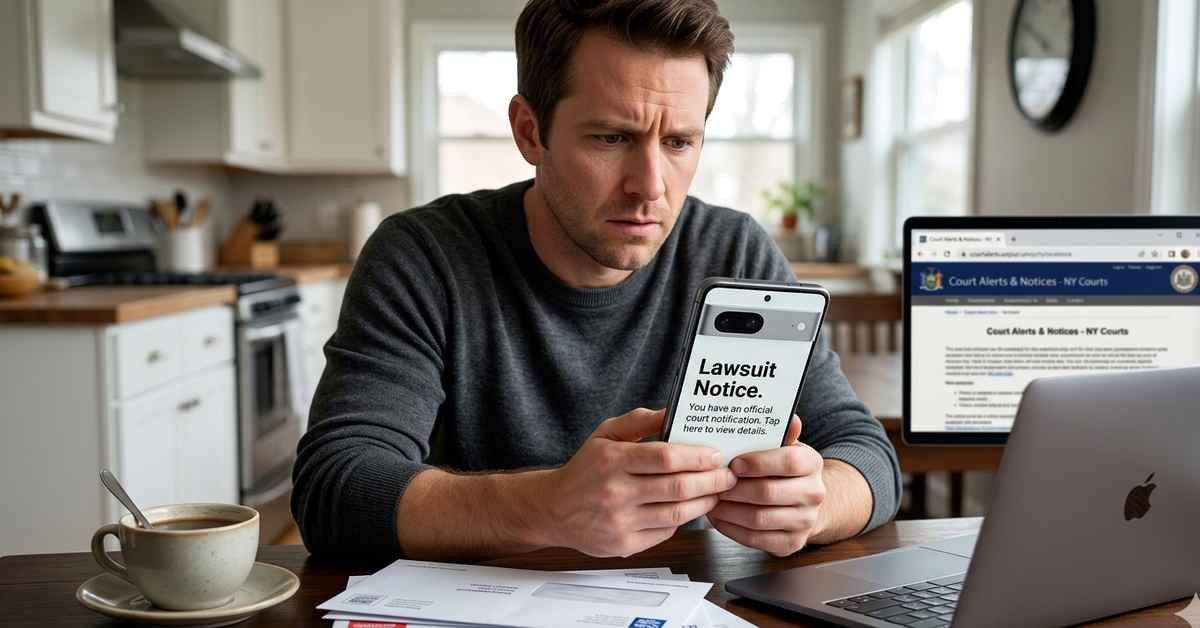
Getting a phone lawsuit notification can feel scary and confusing. You may wonder if it’s a real legal warning or just another scam call. Many people receive calls claiming they are being sued, facing a court summons, or about to receive legal papers. But can a lawsuit really be delivered by phone?
In most cases, official legal notice, court documents, and lawsuit service of process are not given through a simple phone call. However, scammers often use fear tactics and fake legal threats to pressure people into paying money quickly. In this guide, we will explain how real civil lawsuits, court notifications, and legal procedures actually work — so you can protect yourself and respond the right way.
Table of Contents
How are people notified they are being sued?
Being properly notified about a lawsuit is an essential step in legal proceedings, ensuring that the defendant knows about the case and can respond accordingly.
Below are the traditional methods commonly used in the USA and Canada for lawsuit notifications:
What Is a Lawsuit for Phone Calls? phone lawsuit notification
A lawsuit for phone calls usually happens when someone claims the calls were illegal, harassing, or violated privacy laws. Many cases are filed under the Telephone Consumer Protection Act (TCPA), which protects people from unwanted robocalls, spam calls, and automated messages.
Common reasons for phone call lawsuits include:
- Repeated harassment calls
- Debt collectors violating the Fair Debt Collection Practices Act (FDCPA)
- Telemarketing without consent
- Threatening or abusive voicemail messages
- Calling after being told to stop
If a company calls you without permission or uses an auto-dialer system improperly, you may have legal rights. Courts can award financial compensation in some cases. Always document the calls and save any messages as legal evidence.
Why Do I Get a Phone Call Saying Legal Action Is Being Taken Against Me?
Receiving a call claiming “legal action is being taken against you” can feel frightening. In many cases, these calls are scams. Scammers use fear tactics to pressure people into making fast payments.
Common red flags include:
- Threats of immediate arrest
- Demands for payment through gift cards
- Refusal to send written legal notice
- Robotic or scripted messages
Real legal proceedings do not start with a threatening phone call. Official court matters usually involve formal court documents, a summons, or certified mail. If you receive such a call, do not provide personal information. Verify through official court records instead.
Can You Be Notified of a Lawsuit by Phone?
In most situations, you cannot be officially served a lawsuit by phone. The law requires a process called service of process. This means you must receive official paperwork in person, by certified mail, or through another legally approved method.
A simple phone call does not meet the legal standard for proper service. Courts require proof that you were formally notified. If someone claims you were sued but you only received a phone call, it is likely not valid.
Always check with your local court if you are unsure.
“Legal Action Will Be Taken Against You” Phone Call – Is It Real?
Calls that say “legal action will be taken against you” are often scams. Real attorneys and courts do not threaten people over the phone without written notice.
Scam callers often:
- Use aggressive tone and urgency
- Claim you owe back taxes or unpaid loans
- Refuse to provide written documentation
- Demand immediate payment
A legitimate civil lawsuit involves official paperwork and court filings. If you receive such a call, remain calm and request written verification. Never share your Social Security number or banking details.
“A Complaint Has Been Filed Against You” Phone Call – What Does It Mean?
A legal complaint is a document filed in court to begin a lawsuit. If a complaint has truly been filed, you will receive official court summons documents, not just a phone call.
Scammers use this phrase to create panic. They may claim you missed court or owe fines. However, real court complaints are part of public court records and must be formally served.
If unsure, contact your local courthouse directly using official contact information.
Can Text Messages Be Used in a Lawsuit?
Yes, text messages can be used as legal evidence in both civil and criminal cases. Courts may accept texts if they are relevant and properly authenticated.
Text messages can show:
- Agreements between parties
- Threats or harassment
- Proof of communication
- Timeline of events
However, deleted texts or altered messages may be challenged. In some cases, attorneys request digital evidence preservation or subpoena records from carriers.
Always save important conversations if you believe a dispute may lead to legal action.
Can My Phone Records Be Subpoenaed Without My Knowledge?
In some cases, yes. A subpoena is a legal order requiring a company to provide records. Depending on the type of case, your phone carrier may be required to release records without notifying you immediately.
However, certain legal procedures require notice, especially in civil cases. In criminal investigations, law enforcement may obtain records through a court order or search warrant.
Privacy laws vary by jurisdiction. If you believe your records were accessed improperly, consult a legal professional.
How Far Back Can Phone Records Be Subpoenaed?
The time limit depends on the phone carrier and the case. Most providers keep basic call detail records for 12 months to several years. Some data may be stored longer for billing purposes.
Courts consider:
- Type of case
- Relevance of records
- Carrier retention policy
- Statute of limitations
Older records may not be available if they were legally deleted. If records are critical, attorneys often act quickly to preserve them.
What Do Subpoenaed Phone Records Show?
Subpoenaed phone records typically show:
- Phone numbers dialed
- Incoming and outgoing calls
- Call duration
- Date and time stamps
- Text message logs (metadata only)
They usually do NOT include:
- Call recordings
- Text message content (unless separately stored)
These records are often called metadata. They show communication patterns but not the conversation details unless lawfully recorded.
Can Phone Records Be Subpoenaed in a Civil Case?
Yes, phone records can be subpoenaed in a civil lawsuit if they are relevant to the dispute. This often happens in:
- Divorce cases
- Child custody disputes
- Business litigation
- Harassment claims
The requesting party must show the records are important to the case. Courts balance privacy rights with the need for evidence.
How Does a Subpoena for Cell Phone Records Work?
The process usually includes:
- Filing a formal subpoena request
- Court approval or attorney issuance
- Serving the subpoena to the phone carrier
- Carrier providing requested records
The phone company reviews the subpoena to ensure it meets legal standards. Once approved, they send the requested cell phone records to the requesting party.
This process ensures proper legal compliance and protects both privacy and due process rights.
Legal Summary & Guidance
A phone lawsuit notification is usually a warning sign, not an official court action. Real lawsuit paperwork, summons delivery, and legal service requirements follow strict rules and are rarely handled by random phone calls. If someone calls claiming you are being sued, always verify through official court records, consult a legal professional, and never share personal or financial details over the phone. Staying informed helps you avoid scams and understand your true legal rights.