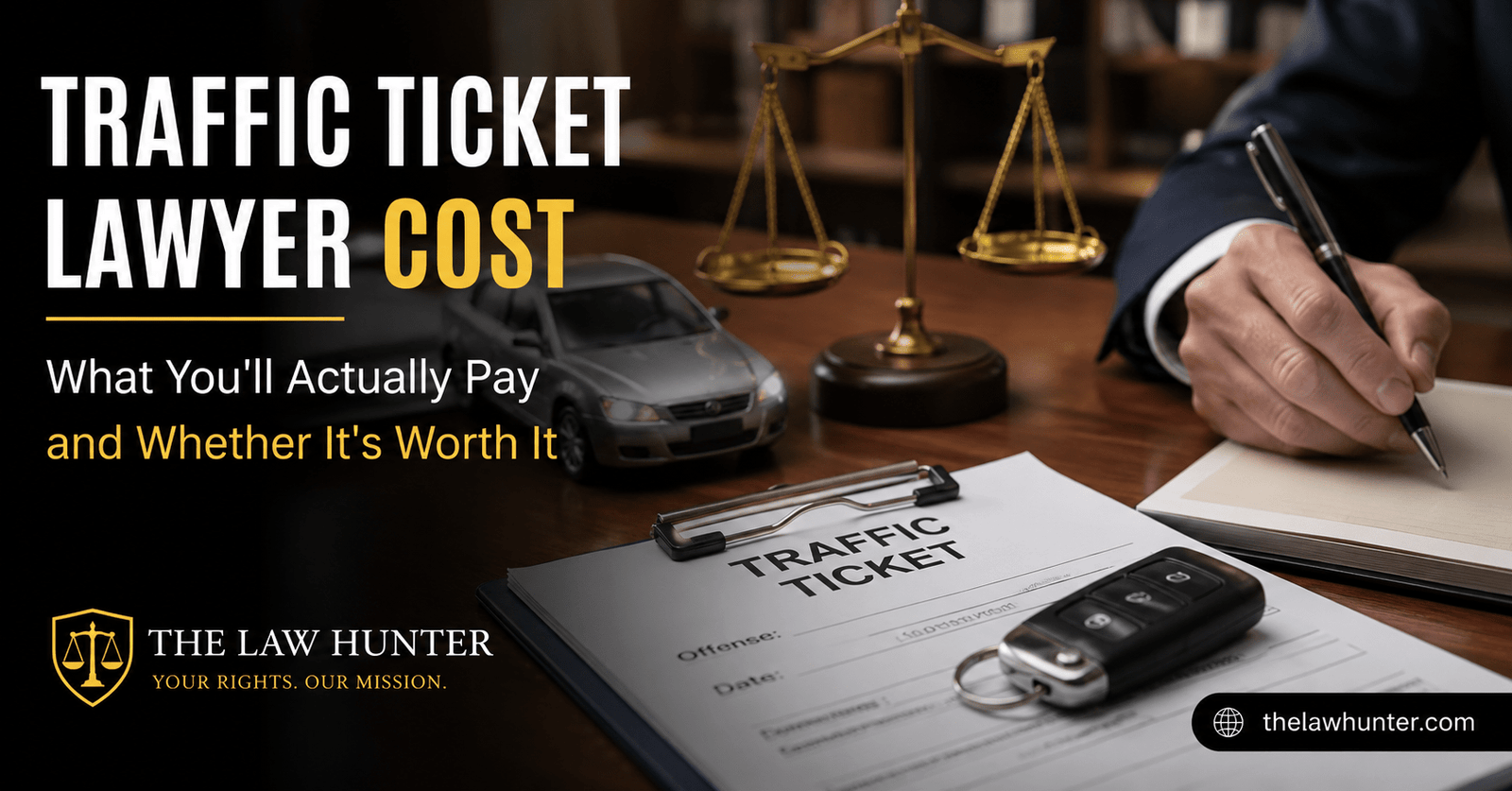
So you got a ticket. Maybe you were speeding, maybe you rolled a stop sign, maybe you genuinely disagree with the whole thing. Either way, now you’re sitting there wondering if a lawyer is worth calling or if that’s just throwing more money at an already bad day. Fair question. Here’s what people actually pay and what you actually get for it.
Table of Contents
Why Should You Even Think About Hiring a Traffic Lawyer?
Look, most people’s first instinct is to just pay the thing and forget it happened. That’s understandable. Nobody wants more hassle after already getting pulled over. But here’s what that decision actually costs you down the road — your insurance carrier finds out at renewal, your rate quietly goes up, and that increase sticks around for three to five years. You paid $200 to settle the ticket and now you’re paying an extra $400 a year. Do that math.
A traffic attorney isn’t just there for serious cases. They know the prosecutors personally. They’ve seen your specific type of ticket dismissed because the officer wrote the wrong speed zone or didn’t show up. You won’t know to look for that. They will.
- Even a “small” ticket puts license points on your record that compound with future violations
- Lawyers negotiate with prosecutors before hearings — deals happen before you even walk into court
- They show up so you don’t have to — no missed work, no sitting in a waiting room half the morning
- For anyone driving commercially, a single point can threaten a CDL license and their entire livelihood
- Tickets sometimes get dismissed on procedural grounds most people never think to check
How Much Is a Traffic Lawyer — Give Me a Real Number
Okay, fair. For a standard speeding ticket — you were going over, cop caught you, nothing dramatic — expect to pay somewhere between $150 and $350 in legal fees. That gets you a consultation, negotiation with the prosecutor, and usually one court appearance if it comes to that.
Reckless driving is more work, so it costs more. Usually $400 to $700. A DUI is a different world entirely — that starts around $1,500 and goes up depending on what happened and what evidence exists. These aren’t random numbers. They track how many hours the lawyer actually has to put in.
- Regular speeding ticket, stop sign, minor stuff: $150–$350
- Reckless driving or aggressive driving: $400–$700
- First-offense DUI: $1,500–$3,500
- DUI repeat or with injury involved: $3,000–$5,000
- Felony-level traffic charges: $5,000 and up, sometimes way up
What Factors Actually Influence Traffic Lawyer Cost?
A few things genuinely change what you’ll pay. None of them are mysterious once you see them laid out.
How Does the Severity of the Offense Change the Price?
Simple connection — harder case means more hours, more hours means higher bill. A lawyer handling a rolling stop citation spends maybe two hours total on your case. A DUI defense involves police reports, dashcam requests, breathalyzer calibration records, maybe an expert witness. That’s weeks of work, not hours.
The price difference isn’t lawyers gouging you on serious cases. It’s just what the work actually costs at that level.
- Minor speeding or rolling stop: $100–$300
- Reckless driving charge: $300–$700
- DUI, suspended license, hit-and-run: starts at $1,000, often much higher
- Trial-bound cases add significantly — plan for thousands more
- Every extra court appearance in hourly arrangements typically runs $150–$400
Does Where You Live Change What a Lawyer Charges?
Quite a bit, actually. A lawyer practicing in downtown Houston or Los Angeles is working in a slower, more complicated court system than someone handling cases in a small rural county. More court dates, more paperwork, higher office costs — all of that ends up in your invoice.
If your ticket happened in a major city, budget higher. If it was a rural highway stop, you’ll likely pay less.
- Urban attorneys often charge 30 to 50 percent more than their rural counterparts
- Some states have genuinely complicated traffic court procedures that eat up prep time
- Your local bar association website usually has a referral section with reasonable options
- Small county cases tend to close faster and cheaper overall
- Always call two or three local attorneys and compare — pricing varies more than you’d think
Why Does the Lawyer’s Experience Level Matter?
Because traffic law is local. An attorney who’s handled hundreds of cases in your specific courthouse knows things that just aren’t in any law textbook. They know which judges are strict about certain violations. They know which prosecutors will negotiate and which ones won’t touch a deal before a hearing. That local knowledge changes outcomes.
It costs a little more. In most cases it’s worth paying for.
- Long-tenured local attorneys have genuine working relationships with prosecutors
- Former district attorneys who moved to defense work understand both sides of the courtroom
- Reputation in a specific courthouse often means faster resolutions
- Don’t evaluate lawyers on price alone — look at reviews and verify state bar standing
- A cheaper attorney who loses your case costs you more than a pricier one who wins
Flat Fee or Hourly — What’s the Better Deal?
For most regular tickets, flat fee is almost always better for you. You know the number upfront, there are no surprises when something takes longer, and the lawyer has every incentive to wrap things up efficiently. Hourly makes sense when a case is genuinely complicated and nobody can predict how long it’ll take.
Whatever they offer, write it down before the work starts.
- Flat fee arrangements work best for straightforward, predictable cases
- Hourly billing typically runs $150–$400 per hour based on experience
- Hourly cases can spiral if the other side is uncooperative or hearings multiply
- Ask specifically what would trigger a switch from flat to hourly mid-case
- Get the billing structure in writing — verbal agreements on money always cause problems
How Much Does a Traffic Ticket Lawyer Cost for Common Violations?
For the stuff most drivers actually deal with — went a little fast, missed a yield, glanced at your phone — the legal fee typically lands between $150 and $400. That covers everything start to finish assuming the case is straightforward.
- Speeding under 20mph over the limit: $150–$250
- Failure to yield or improper lane change: $200–$350
- Running a red light: $200–$400
- Distracted driving or phone use citation: $200–$350
- Minor registration or expired tags issue: $100–$200
How Much Do Traffic Lawyers Cost When the Charge Is Actually Serious?
Once you move past basic infractions into misdemeanor or felony territory, the fee structure changes significantly. DUI defense is not a quick process. It involves pulling records, reviewing evidence, sometimes hiring outside experts, and showing up for multiple hearings over months.
- First DUI offense: $1,500–$3,500
- DUI with injury or prior conviction: $3,000–$5,000
- Hit-and-run misdemeanor: $1,000–$2,500
- Felony vehicular charges: $3,500–$10,000 or more
- Appealing a conviction after the fact: add $2,000–$5,000 on top of everything else
What Does the Lawyer Fee for a Traffic Ticket Actually Cover?
People sometimes feel like they’re just paying for someone to stand next to them in court for twenty minutes. That’s not what you’re actually buying. Most of the work happens before that appearance.
- Full review of your citation, police report, and any available dashcam or body cam footage
- Direct negotiation with the prosecutor’s office — often this is where cases get resolved
- Filing legal motions if there’s a valid basis to challenge the stop or citation
- Court appearance and representation without you needing to be present
- Post-case follow-up to confirm your record correctly reflects the outcome
Does Hiring a Lawyer Actually Beat Just Paying the Fine?
This is where the math surprises people. The ticket fine looks like the cost. It’s not the whole cost.
| Option | What You Pay Now | What Follows |
| Just pay the fine | $100–$300 | Insurance up $400–$800/year for 3–5 years |
| Hire a lawyer | $150–$500 | Possibly zero if dismissed |
| Handle it yourself | $0 upfront | Full conviction risk, no leverage |
Three years of paying an extra $500 annually on your insurance is $1,500 gone — after already paying the fine. A lawyer who gets that ticket dismissed for $250 didn’t cost you money. They saved you some.
- No conviction means zero points — your insurer never even learns it happened
- Clean record means your baseline rate holds at renewal
- Industries like trucking, logistics, and delivery check motor vehicle records before hiring
- For CDL holders, accumulated violations can end a career — not an exaggeration
- The long-term financial picture almost always favors legal help over paying and moving on
How Much Do Traffic Lawyers Charge Just for Court Appearances?
Some attorneys bundle court appearances into a flat rate. Others charge separately per hearing. You need to know which situation you’re in before anything is agreed. For a routine matter, a single standalone court appearance typically costs $200 to $500.
- One appearance on a minor ticket: $200–$400
- Multiple hearings on a contested case: $400–$800 combined
- Serious violation hearings: $500–$1,000 per session
- Flat-fee agreements sometimes cover only one appearance — ask what happens if there’s a second
- The question “how many court dates does this fee cover?” is completely reasonable to ask upfront
Is Hiring a Traffic Lawyer Actually Worth Your Money?
For the vast majority of situations, yes. The cases where paying the fine outright makes sense are narrow — an out-of-state ticket your home state won’t record, or a jurisdiction with automatic diversion for first-time offenses. Otherwise, both the financial math and the record consequences point toward getting help.
- Most traffic cases get resolved before trial through negotiation
- Citation errors — wrong information, officer errors — are more common than drivers realize
- A clean driving record affects insurance, employment screening, and future legal treatment
- Managing court appearances yourself is stressful and typically less effective than having counsel
- Future violations carry steeper consequences when prior marks already exist on your record
Further Readings
Legal Guidance
Traffic ticket lawyer cost ends up being smaller than most people expect and the cost of avoiding it ends up being bigger than the ticket suggests. A few hundred dollars now versus a year-and-a-half worth of elevated insurance premiums — that’s the real comparison people rarely stop to make. Legal situations stack up in strange ways sometimes. Someone researching how to prove adultery in divorce and someone dealing with a traffic citation are in very different spots, but both of them benefit from the same basic truth — knowing the system before you decide beats guessing every time.
Call a local attorney before you pay anything. The consultation is free. The information you walk away with is not.