

File for Divorce Yourself in the U.S is becoming a common choice for couples who want a faster and more affordable way to end a marriage without hiring an attorney. Many states now offer clear family court procedures and online resources that help people complete a pro se divorce, submit a divorce petition, and handle required court paperwork on their own. Still, the process can feel confusing if you don’t understand state divorce laws, filing fees, custody rules, or how a marital settlement agreement works.
This guide will walk you through the basics in simple terms, helping you avoid common mistakes while making sure your divorce filing meets legal requirements and moves smoothly through the court system.
Eligibility Requirements
Before filing, courts require that certain basic conditions be met. These state-specific divorce requirements exist to ensure the court has proper authority over the case.
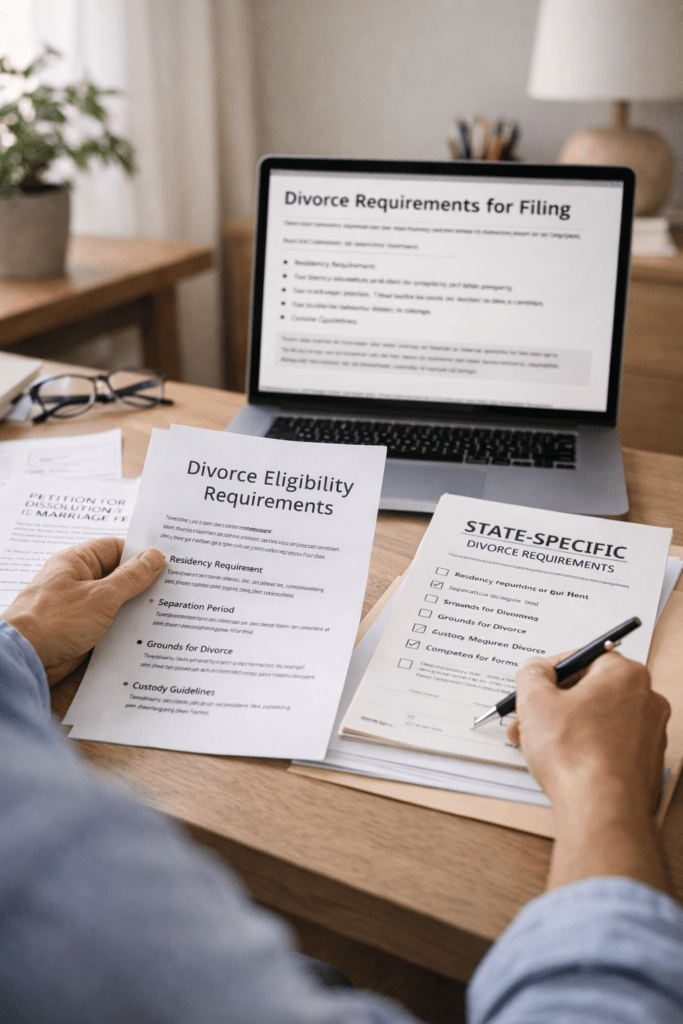
A. Residency Requirements
Every state applies residency rules for filing for divorce, meaning at least one spouse must live in the state for a specific period before filing. In most states, this ranges from six months to one year.
For example, New York requires that certain residency conditions be met before the court accepts a divorce filing. Courts verify residency carefully, as filing in the wrong jurisdiction can delay or dismiss a case.
Many states now allow electronic submission through systems such as online court portals, reflecting the latest divorce law changes aimed at improving access and efficiency.
B. Grounds for Divorce
Divorce cases are filed under either no-fault or fault-based grounds.
Most people qualify under no-fault divorce eligibility, meaning neither spouse must prove wrongdoing. Common no-fault reasons include irretrievable breakdown or irreconcilable differences.
Fault-based divorce, still available in some states, may involve allegations like adultery, abandonment, or cruelty. Some states require mutual consent for no-fault filings, which is part of ongoing legal reforms in divorce procedures designed to reduce litigation.
Step 1: Preparing to File
Preparation is where most self-filers succeed—or fail.
A. Gathering Documentation
Creating a complete divorce documentation checklist is essential. Common documents include:
- Marriage certificate
- Children’s birth certificates
- Bank statements and tax returns
- Property deeds and loan records
Courts rely on accurate documentation, especially if disagreements arise later.
B. Choosing Between Contested vs. Uncontested Divorce
Understanding uncontested divorce steps is critical. If both spouses agree on all issues, the case moves faster and often avoids hearings entirely.
If disagreements exist, the divorce becomes contested, requiring discovery, court filings, and possibly trial—something most self-filers should approach cautiously.
C. Drafting the Petition or Complaint
The divorce begins with filing a petition or complaint. This document outlines:
- Grounds for divorce
- Requests for custody or support
- Property division preferences
Many courts now provide standardized forms and online divorce filing platforms, making this step more accessible for self-represented individuals.
Step 2: Filing the Documents
A. Submitting to the Court
Completed forms are filed with the county clerk or family court. Filing fees apply, but fee waivers are available for qualifying individuals.
Courts increasingly accept electronic filing, reflecting procedural modernisation across multiple states.
B. Issuing a Case Number
Once accepted, the court assigns a case number. This number must appear on all future filings and communications.
Step 3: Serving the Divorce Papers
A. Service of Process Requirements
Courts require that the other spouse be formally notified. This is usually done through a sheriff or licensed process server. Proof of service must be filed promptly.
B. Alternate Service Methods
If a spouse cannot be located, courts may allow service by publication or substituted service. Judges carefully review these requests to protect due process rights.
Step 4: Response from Respondent
Default vs. Answer
The responding spouse typically has a limited time to reply, and similar deadlines also apply in other legal matters, such as a Texas Harassment Case Filing. Failure to respond may lead to a default judgment, allowing the divorce to proceed without opposition.
Step 5: Temporary Orders
Courts may issue temporary orders for custody, support, or housing while the case is pending, including situations that may involve domestic violence restraining orders. These orders maintain stability until final resolution.
Step 6: Discovery and Negotiation
A. Contested Process
If contested, both sides exchange financial and personal information. Transparency is critical, as courts penalise incomplete or misleading disclosures, especially in cases involving property division or a 50/50 custody agreement.
B. Settlement Methods
Most divorces settle through mediation or negotiation. Courts actively encourage settlement because it reduces emotional strain and judicial backlog, one of the most significant recent divorce law changes nationwide.
Step 7: Trial or Finalisation
A. Trial Process
Trials occur only when settlement fails. Judges decide unresolved matters based on evidence and testimony.
B. Final Judgment or Decree
Once finalised, the court issues a divorce decree. This document legally ends the marriage and enforces all terms.
Simplified and Online Divorce Options
Many states now offer simplified procedures for couples with minimal assets and no children. These systems, often supported by online divorce filing platforms, reflect modern court reforms aimed at access and efficiency.
State-Specific Considerations
A. Waiting Periods
Some states require waiting periods before finalisation. These rules exist to allow reconsideration or settlement.
B. Community vs. Equitable Distribution
Property division depends on whether a state follows community property or equitable distribution principles—an area where state-specific divorce requirements vary widely.
Practical Tips for Self-Filers
A. Organisation and Documentation
Keep copies of everything. Courts expect organised, timely filings from self-represented parties.
B. Legal Support and Advice
Even when using a pro se divorce process guide, short consultations with an attorney or legal aid organisation can prevent costly mistakes.
C. Emotional Support
Divorce affects more than paperwork. Mediation, counselling, or support groups often help individuals remain focused and clear-headed during proceedings.
Final Verdict
File for Divorce Yourself in the U.S on your own is legally possible and, in many cases, practical. With a clear understanding of state-specific divorce requirements, proper preparation, and careful filing, individuals can navigate the process successfully.
While self-representation saves money, it requires responsibility and attention to detail. Courts expect the same standards from all parties—represented or not. With informed preparation and respect for procedure, individuals can complete the divorce process while protecting both their rights and their future.