

Moving Infractions are one of the most common reasons drivers in St. Louis receive traffic tickets, yet many people do not fully understand what they mean or how serious they can be.
Traffic tickets in Missouri can be confusing—especially when you’re told your offence is either a moving or non-moving infraction. That distinction matters more than most drivers realise because it can affect your driving record, insurance rates, fines, and even whether your driver’s license is at risk.
This guide explains the real difference between moving infractions and non-moving infractions in Missouri, how each one impacts your future, and what you can do if you receive a traffic citation. If you’ve been cited and are unsure where you stand, understanding Missouri traffic law is your first step toward protecting your rights.
What Is a Moving Infraction?
A moving infraction refers to a traffic offence that occurs while a vehicle is actively in motion and involves a driver’s behaviour on the road. These infractions are considered more serious because they directly impact road safety, traffic flow, and the likelihood of motor vehicle accidents.
From a legal perspective in Missouri, moving infractions signal driver fault or poor judgment, which is why they are tracked through the Missouri driving record and the state point system.
For drivers trying to understand citations, points, and penalties, Traffic Tickets Explained helps clarify how Missouri law separates moving infractions from non-moving infractions and why that distinction matters for your driving future.
Key characteristics of a moving infraction include:
- The vehicle is moving at the time of the offence.
- The conduct violates traffic safety laws
- Points are assessed against the driver’s license
- The infraction may increase auto insurance premiums
- Repeated offences can lead to license suspension
Understanding what qualifies as a moving infraction helps drivers recognise when a ticket carries long-term legal and financial consequences, not just a fine.
Common Examples of Moving Infractions in Missouri
Missouri law identifies numerous behaviours as moving infractions because they increase the risk of collisions and injuries. These offences are frequently cited by St. Louis law enforcement and prosecuted in municipal traffic courts.
Common examples of moving infractions include:
- Speeding violations (including excessive speed)
- Running a red light or stop sign
- Failure to yield the right of way
- Improper or unsafe lane changes
- Following too closely (tailgating)
- Careless or reckless driving
- Driving under the influence (DUI/DWI)
- Passing a stopped school bus
- Driving without a valid license
Each of these behaviours involves active driving decisions, which is why Missouri courts treat them as higher-risk traffic offences.
What Is a Non-Moving Infraction?
A non-moving infraction generally involves vehicle compliance issues or administrative oversights, rather than dangerous driving behaviour. These infractions typically occur when the vehicle is parked, stopped, or inspected, not while it is moving.
Although non-moving infractions are still legal violations, they are usually considered less severe under Missouri law.
Common non-moving infractions include:
- Parking tickets
- Expired registration or license plates
- Equipment issues (broken headlights or taillights)
- Failure to display proof of insurance
- Expired driver’s license (in limited situations)
Most non-moving infractions do not add points to a driver’s record, but ignoring them can still lead to fines or court involvement.
Moving vs. Non-Moving Infractions: Key Differences
The distinction between moving and non-moving infractions is critical because it determines how a ticket affects your license, insurance, and legal standing.
Key differences include:
- Vehicle movement: Moving infractions occur while driving; non-moving infractions usually do not
- Point assessment: Moving infractions often add points under the Missouri point system
- Insurance impact: Moving infractions frequently raise insurance premiums
- License risk: Multiple moving infractions can lead to a driver’s license suspension
- Court treatment: Moving infractions are more likely to be contested in court
This difference explains why drivers often challenge moving infractions but pay non-moving tickets without dispute. Many drivers underestimate the real costs of a non-moving or moving violation, especially when insurance increases, court fees, and long-term driving record damage are taken into account.
How Missouri’s Point System Works
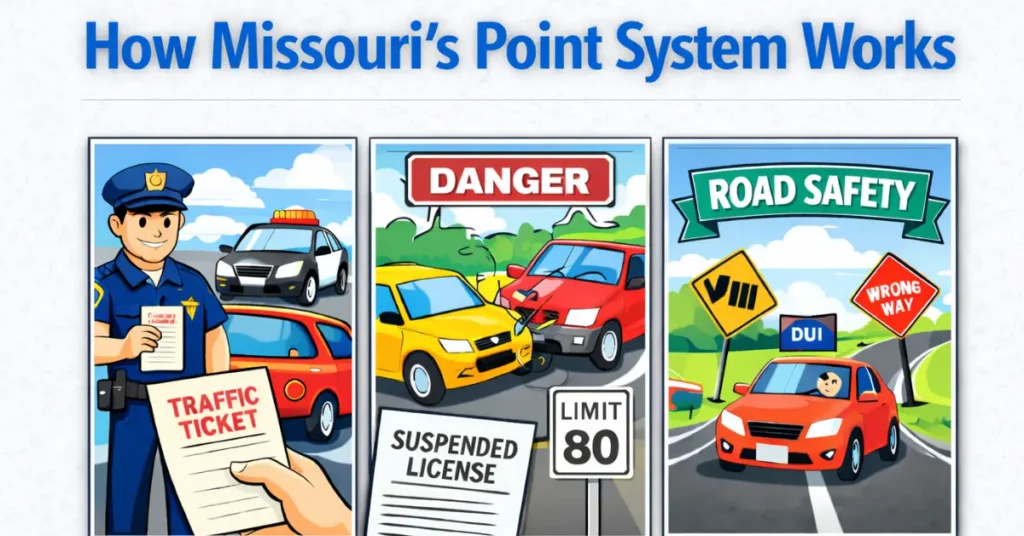
Missouri uses a driver point system to monitor unsafe driving behaviour and identify drivers who pose a risk to public safety. Points are added only after a conviction, not when a ticket is issued.
How the system operates:
- Points accumulate over time
- Higher-severity infractions carry more points
- Reaching certain thresholds triggers license suspension or revocation
Typical point values include:
- Speeding: 2–3 points
- Careless or reckless driving: 4 points
- Running a red light: 2 points
- DUI/DWI: 8–12 points
- Leaving the scene of an accident: 12 points
Accumulating 8 points within 18 months can result in suspension, making early legal action extremely important. Additionally, many drivers may wonder, Do Officers Attend Traffic Court? Understanding the court process is key to knowing how your case will proceed.
Insurance Consequences You Should Know About
Insurance companies treat moving infractions as indicators of high-risk driving behaviour. Even one conviction can impact your policy.
Possible insurance consequences include:
- Increased car insurance premiums
- Loss of safe driver or good-driver discounts
- Placement into a higher-risk insurance category
- Policy non-renewal after serious offenses
Non-moving infractions usually do not affect insurance unless they involve a lack of coverage or repeated violations.
Missouri-Specific Definition of a Moving Infraction
Under Missouri traffic law, an infraction is classified as moving when:
- The vehicle is in motion, and
- The driver’s actions violate traffic safety statutes
In St. Louis municipal courts, prosecutors often rely on:
- Police officer testimony
- Dashcam or body-camera footage
- Traffic camera evidence
- Witness statements
This legal definition matters because it determines whether points apply and whether the infraction can be negotiated.
Can a Moving Infraction Be Reduced to a Non-Moving Infraction?
Yes. In many cases, a moving infraction can be reduced or amended, especially for first-time offenders or drivers with clean records.
Possible outcomes include:
- Reduction to a non-moving infraction
- Fewer or zero points
- Lower fines and court costs
- Dismissal after meeting conditions (such as compliance proof)
This is one of the strongest reasons drivers seek help from a St. Louis traffic attorney.
Should You Fight a Traffic Ticket?
Fighting a ticket is often advisable when the consequences go beyond a simple fine.
You should consider contesting a ticket if:
- Points will be added to your driving record
- Your insurance rates may increase
- Your license is at risk
- You already have prior infractions
In many cases, fighting a ticket helps reduce long-term costs and protects your driving privileges. It’s important to consider how prosecution without a witness might impact your case, especially if the evidence is based on circumstantial or non-witness testimony.

What Happens If You Ignore a Traffic Ticket?
Ignoring a traffic ticket in Missouri can quickly escalate into serious legal trouble.
Potential consequences include:
- Additional fines and late fees
- Driver’s license suspension
- Court-issued bench warrants
- Increased insurance penalties
Failing to respond can turn a minor infraction into a major legal issue.
How Traffic Court in St. Louis Works
Traffic cases in St. Louis municipal court follow a structured legal process.
The typical process includes:
- Arraignment (first court appearance)
- Entry of a plea
- Negotiation or trial
- Judgment, reduction, or dismissal
An attorney can often appear on your behalf, reducing stress and improving outcomes.
Why Legal Guidance Matters
Traffic law may appear simple, but the consequences of mistakes can follow you for years.
Legal guidance helps by:
- Protecting your driving record
- Reducing or eliminating license points
- Minimising insurance increases
- Navigating complex court procedures
Understanding your rights and options after a moving infraction can make a decisive difference in your future as a driver. Additionally, Harassment and Your Legal Rights should be understood as part of the broader legal framework when dealing with traffic or legal violations.
Further Readings:
What Distinguishes California’s Open and Closed Adoptions?
What Is the Average Cost of a Family Lawyer in North Carolina?
FAQs:
1. What is a moving infraction in Missouri?
A moving infraction is a traffic offence that occurs while your vehicle is in motion. In Missouri, it includes unsafe driving behaviours like speeding, running stop signs, or reckless driving. Moving infractions usually add points to your driving record and may impact insurance premiums.
2. When does a moving infraction occur?
A moving infraction occurs whenever a driver violates a traffic law while driving. Examples include improper lane changes, tailgating, or DUI. Missouri law distinguishes these from non-moving infractions like parking violations, which occur while the vehicle is stopped.
3. Where can you contest a moving infraction in St. Louis?
Moving infractions can be contested in St. Louis Municipal Court or other local traffic courts. Drivers can plead not guilty, negotiate a reduction, or request a trial. Hiring a traffic attorney often improves the chance of reducing points or fines.
4. How does a moving infraction affect your driving record?
Most moving infractions result in points added to your Missouri driving record. Accumulating points can lead to license suspension, higher insurance rates, or even revocation. Each infraction has a specific point value based on severity.
5. Who issues moving infractions in Missouri?
Moving infractions are issued by law enforcement officers, including local police, highway patrol, and sometimes traffic enforcement agencies. They may also be recorded via traffic cameras.
6. Why are moving infractions considered more serious than non-moving infractions?
Because moving infractions involve active driving decisions, they pose a higher risk of accidents, injuries, and property damage. Non-moving infractions usually involve administrative issues, like expired registration, which have less direct safety impact.
7. What are the most common moving infractions in St. Louis?
Common moving infractions include:
- Speeding violations
- Running stop signs or red lights
- Failure to yield
- Improper lane changes
- Reckless or careless driving
- DUI/DWI
- Passing a stopped school bus
These are frequently cited in St. Louis traffic court.
8. When can a moving infraction be reduced to a non-moving infraction?
A moving infraction may be reduced during court negotiation, particularly for first-time offenders or minor offences. Examples include amending a speeding ticket to a non-moving infraction to reduce points or fines.
9. How many points does a moving infraction add in Missouri?
Point values vary depending on the offence:
- Speeding: 2–3 points
- Reckless driving: 4 points
- DUI/DWI: 8–12 points
- Leaving the scene of an accident: 12 points
Accumulating 8 points in 18 months can result in license suspension.
10. Who should I contact if I want to fight a moving infraction?
Drivers should contact a licensed traffic attorney in St. Louis or a Missouri criminal defence lawyer experienced in municipal traffic law. Professional guidance increases the chance of point reduction or dismissal.
11. Why do insurance companies care about moving infractions?
Insurance providers view moving infractions as signs of high-risk driving behaviour. Even one infraction can increase auto insurance premiums, affect safe driver discounts, and in severe cases, lead to policy non-renewal.
12. Where can I find Missouri’s point system for moving infractions?
Missouri’s point system is published by the Missouri Department of Revenue and is applied in all state traffic courts. It details points for each offence, helping drivers understand potential license consequences.
13. How long do moving infractions stay on a Missouri driving record?
Moving infractions generally remain on your Missouri driving record for three years. The impact on insurance premiums may last longer, depending on the severity of the infraction.
14. What is the difference between a moving infraction and a traffic ticket?
A moving infraction is a type of traffic offence that occurs while the vehicle is moving, whereas a traffic ticket is the formal citation issued for the offence. Moving infractions often carry points, fines, and insurance impact, while non-moving infractions are usually simpler.
15. Why is legal guidance important for moving infractions in St. Louis?
Legal guidance helps drivers protect their driving record, reduce points and fines, and navigate Missouri traffic courts. An experienced St. Louis traffic attorney can negotiate reductions, dismissals, or alternative penalties, saving time, money, and potential license suspension.
Wrap-Up: Understanding Moving vs. Non-Moving Infractions in St. Louis, Missouri
Navigating moving infractions in Missouri can be confusing, but understanding the distinction between moving and non-moving infractions is essential for every driver in St. Louis.
Key takeaways from this guide:
- Moving infractions occur while the vehicle is in motion and typically carry points, fines, and insurance consequences.
- Non-moving infractions usually involve administrative or compliance issues and are generally less severe.
- Missouri’s point system tracks driving behaviour, and accumulating points from multiple moving infractions can lead to license suspension or revocation.
- Insurance companies treat moving infractions as indicators of high-risk driving, potentially increasing premiums.
- Legal guidance can help reduce points, fines, or even dismiss a citation, protecting your driving record and financial stability.
Ultimately, knowledge is power. By understanding what qualifies as a moving infraction, the potential consequences, and how to legally contest tickets in St. Louis municipal courts, drivers can make informed decisions that protect their licenses, insurance, and driving privileges.
If you ever receive a ticket, consider consulting a Missouri traffic attorney to explore your options. Even a single moving infraction can have long-term effects, so taking prompt action is always the best strategy.
Drive safe, stay informed, and always know your rights when it comes to moving infractions.
References:
- Missouri Traffic Law: Understanding Moving and Non-Moving Violations – John H. Smith, 2021
Covers Missouri traffic statutes, point system, and driving infractions in detail. - Traffic Law and Practice in Missouri – Richard J. Adler, 2020
Provides a comprehensive overview of traffic violations, court procedures, and penalties. - Missouri Drivers Handbook – Missouri Department of Revenue, 2023 Edition
Official guide used for driver education and licensing; includes infractions, points, and safety rules. - Practical Guide to Traffic Ticket Defence – Melissa B. Carter, 2019
Covers legal strategies for contesting moving infractions in municipal courts. - Handbook on Traffic Safety Law – Robert L. Peterson, 2022
Provides expert insights on risk, insurance implications, and safety-focused driving behaviour.
- Missouri Revised Statutes (RSMo) – Chapters 300–307
Contains all state traffic laws, including moving and non-moving infractions. - Missouri Department of Revenue – Driver Licensing Division
Official source for point system, license suspension rules, and driver records.
Website: https://dor.mo.gov/drivers/ - St. Louis Municipal Code – Traffic Regulations
Local laws for traffic infractions within St. Louis city limits.
Website: https://library.municode.com/mo/st._louis/codes/code_of_ordinances - Missouri State Highway Patrol – Traffic Safety and DUI Information
Website: https://www.mshp.dps.missouri.gov/ - National Highway Traffic Safety Administration (NHTSA) – Traffic Safety & Accident Risk
Website: https://www.nhtsa.gov/