

Harassment can happen at work, at school, online, or even in public places. It can make you feel unsafe, stressed, and powerless. But the truth is — you have protection under the law. Understanding Types of Harassment and Legal Rights can help you take the right steps and protect yourself.
Harassment is not just rude behavior. It includes workplace harassment, sexual harassment, cyber harassment, verbal abuse, and hostile work environment situations. Laws are designed to protect people from unfair treatment, discrimination, and emotional harm. If someone’s behavior makes you feel threatened, bullied, or targeted because of your gender, race, religion, disability, or age, you may have legal options.
Knowing your rights gives you confidence. And when you understand what counts as harassment, you can respond in a smart and safe way.
Defining Harassment
Harassment is unwanted behavior based on protected characteristics, such as race, sex, disability, or religion. The Equal Employment Opportunity Commission (EEOC) defines harassment as conduct that creates a hostile work environment or interferes with employment decisions, such as promotions or terminations.
While isolated incidents of offensive conduct might not be legally classified as harassment, frequent or severe incidents that negatively impact work performance or create a threatening environment qualify as harassment under U.S. federal law.
It’s important to note that harassment claims must be supported by evidence of substantial harm or discriminatory intent, ensuring that the conduct is not just isolated but part of a pattern of behavior.
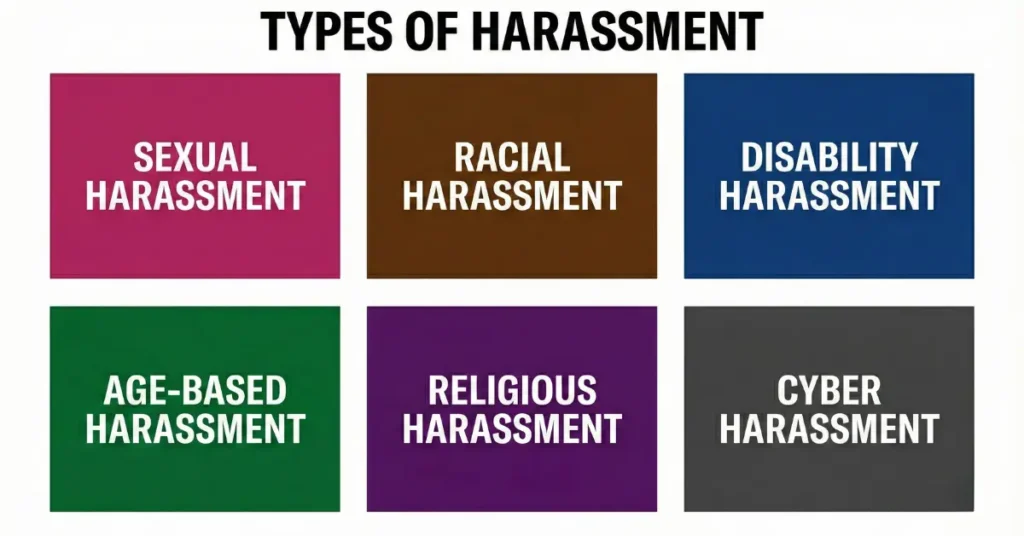
Types of Harassment
Sexual Harassment
Sexual harassment involves unwelcome sexual advances, requests for sexual favors, or sexually suggestive comments. There are two main types of sexual harassment:
- Quid Pro Quo: Where job benefits are conditioned upon sexual favors.
- Hostile Work Environment: When repeated sexual advances, comments, or behavior make the workplace intolerable.
Under Title VII of the Civil Rights Act of 1964, victims can file complaints with the EEOC. Employers must take proactive measures to prevent sexual harassment by implementing policies, providing training, and establishing clear reporting channels.
Racial Harassment
Racial harassment targets individuals based on their race, ethnicity, or skin color. Examples include:
- Derogatory remarks or racial slurs.
- Offensive symbols or displays of hate speech.
Under Section 1981 of the Civil Rights Act of 1866, racial discrimination in employment and contracts is prohibited. Employers must act swiftly to address racial harassment to maintain compliance with federal and state laws.
Disability Harassment
Disability harassment occurs when an individual is targeted due to a physical or mental disability. Employers must comply with the Americans with Disabilities Act (ADA), which requires reasonable accommodations for employees with disabilities and prohibits discriminatory behavior.
Disability harassment might include:
- Mocking a person’s condition.
- Excluding them from activities or creating physical barriers to access.
Failure to provide reasonable accommodations or allowing discriminatory behavior can lead to legal action under the ADA.
Age-Based Harassment
Age-based harassment mainly affects employees over the age of 40, as protected under the Age Discrimination in Employment Act (ADEA). Examples include:
- Derogatory comments about an employee’s age.
- Exclusion from training or promotions based on age-related stereotypes.
For example, belittling an older employee’s ability to learn new technology could be considered harassment. Employers should foster a culture of respect and inclusion across all age groups.
Religious Harassment
Religious harassment involves unwelcome conduct based on an individual’s beliefs or religious practices. This includes:
- Mocking religious attire or symbols.
- Restricting prayer times or pressuring someone to abandon their faith.
Title VII mandates that employers make reasonable accommodations for religious practices unless it creates undue hardship on the company. Employees who face religious harassment can file complaints with the EEOC.
Cyber Harassment
With the rise of digital platforms, cyber harassment has become a serious concern. Cyber harassment includes:
- Online threats and stalking.
- Offensive communications via email, social media, or messaging platforms.
While the Communications Decency Act provides a legal foundation, many states have enacted specific anti-harassment laws to address online abuse. Victims of cyber harassment can file complaints or seek protection orders.
Legal Protections and Rights
Both federal and state laws protect individuals from harassment. The EEOC plays a vital role in investigating harassment claims and enforcing regulations. If you are a victim of harassment, you can file a complaint with the EEOC within 180 to 300 days, depending on state-specific laws.
The legal process typically includes:
- Mediation: Attempts to resolve the dispute through a neutral third party.
- Investigation: A thorough review of the harassment claim.
- Legal Action: If necessary, the EEOC can take the matter to court.
Employers are encouraged to take proactive steps to prevent harassment, such as establishing anti-harassment policies and conducting regular employee training.
What to Do If You Experience Harassment
If you believe you are a victim of harassment, here’s what you should do:
1. Document Every Incident
Start by keeping a detailed record of each harassment incident. Include the date, time, location, and individuals involved. This documentation will be crucial for any legal action or EEOC filing.
2. Report the Harassment
Report the harassment to your HR department or supervisor. If internal reporting does not resolve the issue, file a complaint with the EEOC or your relevant state agency. The EEOC investigates harassment claims and provides guidance on legal actions.
3. Seek Legal Counsel
Consulting a lawyer specializing in employment law can help clarify your options, particularly if your case involves retaliation or multi-layered discrimination. A lawyer will also ensure that you follow the proper legal procedures and represent you in court if needed.
Preventing Harassment in the Workplace
Proactive Employer Responsibility
The most effective way to address harassment is through prevention. Employers are legally required to take proactive steps to minimize harassment risks.
These steps include:
- Creating anti-harassment policies that clearly outline unacceptable behaviors.
- Providing mandatory training programs to all employees, particularly managers, to identify and prevent harassment.
Promoting a Zero-Tolerance Culture
Fostering a zero-tolerance culture ensures that harassment is immediately addressed, and offenders face consequences. This not only complies with legal obligations but also enhances workplace morale and productivity.
Further Readings
Workplace Harassment Legal Rights
Legal Summary & Guidance
Harassment is more common than many people think, but you don’t have to stay silent. Whether it involves workplace discrimination, online bullying, retaliation, or abusive conduct, the law offers protection. Learning about your rights helps you recognize unlawful behavior and take action when necessary.
If you ever face harassment, document everything, report the issue properly, and seek legal advice if needed. The more you understand your protections, the stronger and more confident you become.