
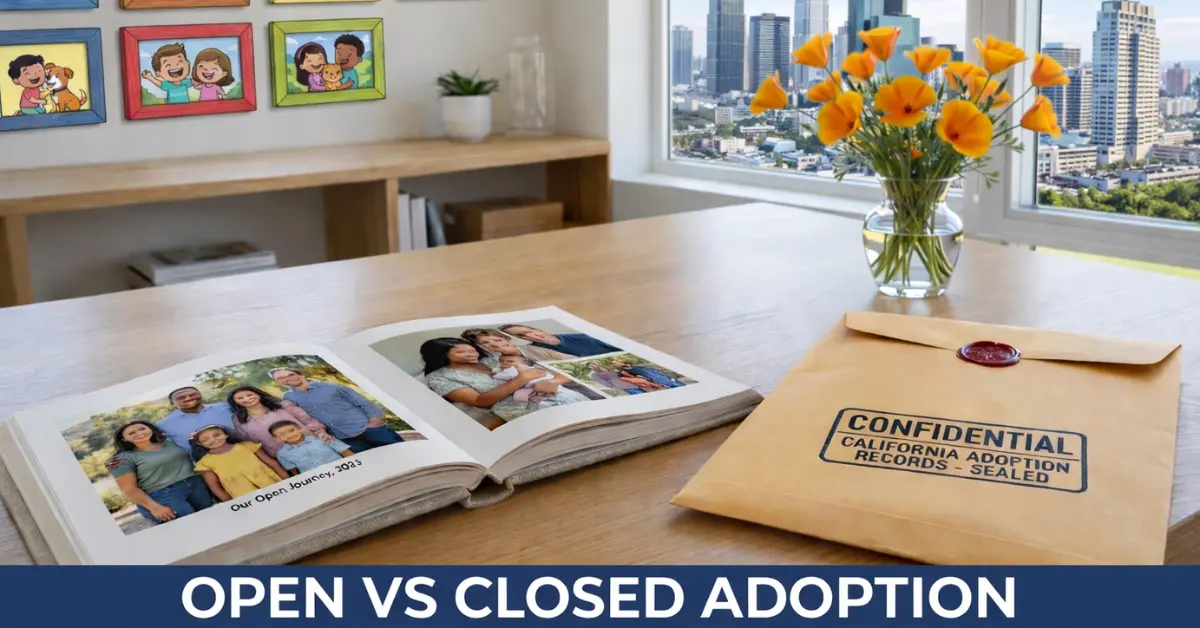
Open vs Closed Adoption in California is one of the most important decisions adoptive and birth families will ever make. Understanding the difference helps parents prepare emotionally and legally before moving forward. In an open adoption agreement, families may share names, photos, and ongoing contact. In contrast, a closed adoption process keeps identifying details private and limits communication. Each option has different rules under California adoption law, especially regarding post-adoption contact agreements (PACAs) and birth parent rights. Knowing how these systems work can protect your family’s future and support a child’s emotional well-being.
What is Open Adoption?
Through open adoption, the biological parents and adoptive parents are able to maintain communication with one another and participate in the child’s growth and development.
In California, open adoptions may involve various levels of interaction, ranging from scheduled visits and video calls to letter exchanges, providing a way for the child to know their birth family.
The California courts often require clear agreements to outline the extent and nature of contact, allowing flexibility to meet the needs of both families.

Benefits of Open Adoption
Open adoption offers numerous advantages. For birth parents, it grants a sense of reassurance, knowing they can witness their child’s progress and well-being. Adoptive families benefit from having access to the child’s medical and familial history, which can be vital for the child’s health and identity.
Challenges of Open Adoption
While open adoption has its advantages, it can also bring challenges. Balancing relationships between birth and adoptive families requires establishing boundaries that are comfortable for all parties.
Emotional complexities may arise as families navigate these relationships, making it essential to address feelings, fears, and expectations openly.
What is Closed Adoption?
In California, on the other hand, a closed adoption means that after the adoption is finalized, there is little to no communication between the adoptive family and the birth parents.
Unlike open adoption, closed adoption records are often sealed, maintaining confidentiality and allowing a sense of closure for the birth parents.
Benefits of Closed Adoption
A kind of adoption known as a closed adoption helps birth parents by honoring their right to privacy and giving them a sense of closure.
For adoptive parents, it can allow a fresh start with fewer complexities in relationships. It also allows the child to grow up within the adoptive family structure without outside influences from birth relatives.
Challenges of Closed Adoption
The absence of familial history can impact a child’s emotional well-being as they grow older. Children may lack details about their birth family, leading to potential identity questions as they mature.
Closed adoptions may also leave adoptive families without medical information, which could be relevant to the child’s health.
Comparison Between Open and Closed Adoptions in California
| Feature | Open Adoption | Closed Adoption |
| Definition | Allows birth and adoptive families to stay in touch. | No contact between birth and adoptive families |
| Contact Level | Communication can include in-person visits, phone calls, and photos | No communication; adoption records are sealed |
| Control of Contact | Birth and adoptive parents decide on the level of interaction | No option for post-adoption contact |
| Access to Birth Info | Adoptee has access to family history and medical information | Adoptee typically lacks family medical history and may have limited information |
| Privacy | Lower privacy for birth parents, as some contact is maintained | High privacy for birth parents; adoptive family receives limited background |
| Emotional Impact | Can foster a sense of identity and connection for adoptees | Can create a sense of mystery or unknown for adoptees about their origins |
| Legal Considerations | Agreements can be legally binding or informal | No post-adoption agreements are made |
Legal Aspects of Open and Closed Adoption in California
In California, legal agreements are essential in determining the nature of adoption. Open adoption agreements allow birth parents and adoptive families to create enforceable contracts, which outline terms for interaction.
However, these agreements need judicial oversight to ensure they are in the child’s best interests.
Confidentiality laws protect information in closed adoptions, ensuring privacy for birth parents, and often require court approval if the records are to be unsealed.
Considerations for Open and Closed Adoption
Choosing between open and closed adoption depends on many factors, including emotional readiness and long-term considerations for both the birth and adoptive families.
Social influences and cultural factors can also play a role, as California’s diverse population brings various perspectives on family and identity.
Trends in Adoption Practices in California
The trend in California is moving towards open adoption, as many families appreciate the benefits of continued family connections. Statistics show that over 60% of adoptions are now open in the U.S., reflecting a growing preference for openness and communication.
Conclusion
Open vs Closed Adoption in California ultimately comes down to privacy, communication, and long-term expectations. Families must carefully consider legal adoption procedures, emotional readiness, and the benefits of ongoing birth family contact versus confidentiality. Both options are recognized under state law and can provide a loving, stable home when structured correctly. By understanding these key differences, parents can make a confident, informed decision that supports the child’s best interests and long-term stability.