

What Does a No Fault Divorce Mean in Virginia? In simple terms, a no fault divorce in Virginia allows a couple to end their marriage without proving that one spouse did something wrong. Instead of blaming a partner for issues like adultery, abandonment, or cruelty, the spouses simply state that their marriage has irretrievably broken down and cannot be repaired.
Virginia law gives couples the option to divorce based on separation, which means they have lived apart for a specific period of time. In most cases, spouses must live separately for one year before filing for a no-fault divorce. However, if the couple has no minor children and signs a separation agreement, the waiting period can be reduced to six months.
Many people choose this type of divorce because it is usually less stressful, less expensive, and faster than a fault-based divorce. It also helps couples avoid lengthy court battles about who caused the marriage to fail.
Understanding how a Virginia no-fault divorce process works can help you prepare for issues like property division, spousal support, and child custody arrangements. Knowing your rights and responsibilities makes the process smoother and protects your future.
What is a No-Fault Divorce?
A no-fault divorce in Virginia means neither spouse must prove adultery, cruelty, or abandonment. The marriage simply ends because it can no longer continue.
From my experience handling many divorce cases, removing blame changes everything. Instead of focusing on accusations, couples can focus on solutions.
This type of divorce supports emotional stability, especially when children are involved, and reflects modern thinking in Virginia family law reforms aimed at minimizing conflict.
Requirements for a No-Fault Divorce in Virginia
Although the process is simpler, Virginia still requires specific conditions to be met.
Residency
At least one spouse must live in Virginia for six months before filing. This is a basic requirement under Virginia divorce residency requirements.
Separation Period
Virginia requires physical separation:
- One year if minor children are involved
- Six months if there are no children and a written agreement exists
This separation period helps confirm the marriage has ended and aligns with Virginia divorce separation period standards.
A signed agreement should clearly outline property division and support terms, which often prevents future disputes.
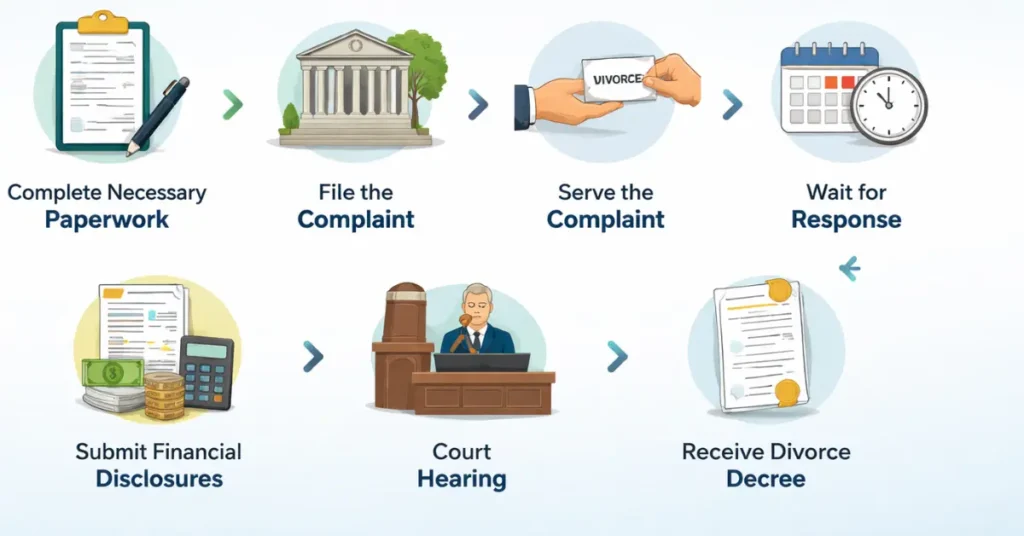
Filing Process for No-Fault Divorce in Virginia
The Virginia divorce process follows structured steps to ensure fairness, whether couples work with counsel or choose to file divorce yourself in uncontested situations.
Complete Necessary Paperwork
The divorce complaint includes separation details and any agreements already reached.
File the Complaint
Documents are submitted to the local court once all eligibility requirements are met.
Serve the Complaint
The other spouse must formally receive the paperwork.
Wait for Response
The responding spouse may agree or raise specific concerns.
Submit Financial Disclosures
Required when discussing spousal support in Virginia no-fault cases or property matters.
Court Hearing
Uncontested cases often avoid hearings entirely.
Receive Divorce Decree
Once approved, the divorce becomes final.
Additional Considerations for No-Fault Divorce in Virginia
Many couples choose latest no-fault divorce rules Virginia because they value privacy and efficiency, a trend that also reflects broader patterns seen in divorce rates in Virginia.
However, no-fault does not mean no issues. Property division, custody, and support can still require discussion or mediation.
For example, I once represented a couple who fully agreed on divorce but disagreed on their home. Because the process stayed cooperative, they resolved it without unnecessary delays—something rarely possible in fault-based cases.
Advantages of No-Fault Divorce
A no-fault divorce legal requirements Virginia approach provides several advantages, and in some situations, couples also explore related legal strategies such as legally avoiding alimony in North Carolina when planning post-divorce finances.
Reduced Emotional Stress
No accusations mean less emotional damage.
Lower Legal Costs
Avoiding trials significantly reduces expenses.
Faster Resolution
Clear timelines under no-fault divorce timeline Virginia help couples move on.
Amicable Settlements
Cooperation is encouraged rather than confrontation.
Improved Co-Parenting Opportunities
Parents often communicate better after a peaceful process.
Comparative Advantages of No-Fault Divorce
| Aspect | No-Fault Divorce | Fault-Based Divorce |
|---|---|---|
| Emotional Impact | Lower | Often Higher |
| Legal Costs | Generally Lower | Higher |
| Resolution Speed | Faster | Slower |
| Co-Parenting | More Positive | Often Strained |
Potential Challenges of No-Fault Divorce
Even with no blame, challenges may still arise.
Disagreements over Asset Division
Especially when discussing Virginia marital property division.
Spousal Support Disputes
Support decisions still require careful evaluation.
Custody Arrangements
Children’s best interests always remain the priority under child custody in Virginia no-fault divorce.
Legal Fees and Time Delays
Disputes can increase both time and cost if not resolved early.
Comparing No-Fault and Fault-Based Divorces in Virginia
The decision between no-fault and fault-based divorce depends on circumstances.
Proof and Blame Requirement
No-fault removes the need for evidence.
Impact on Asset Division and Alimony
Fault may still influence outcomes in some cases.
Custody Considerations
Child safety and stability always come first.
Legal Complexity and Costs
Fault-based divorces are typically longer and more expensive.
Practical Real-Life Perspective
In real life, I’ve seen couples complete Virginia no-fault divorce 2026 updates cases smoothly when communication remains respectful. One couple with children finalized their divorce quietly, protected their finances, and maintained a healthy co-parenting relationship—something rarely achieved through hostile litigation.
Conclusion
A no fault divorce in Virginia means a married couple can legally end their marriage without accusing either spouse of wrongdoing. Instead of proving fault, the couple must meet the legal requirement of living separate and apart for a specific period of time.
In most situations, spouses must live separately for 12 months before filing. If the couple has no minor children and signs a marital separation agreement, the waiting period may be reduced to six months.
This type of divorce is commonly called an uncontested divorce in Virginia because both spouses usually agree on important matters such as division of marital property, spousal support, child custody, and child support. Because there is less conflict, the process is often quicker and more affordable than a fault-based divorce.
Overall, understanding what a no fault divorce means in Virginia helps couples make informed decisions, reduce emotional stress, and move forward with a clear legal path when a marriage can no longer continue.